

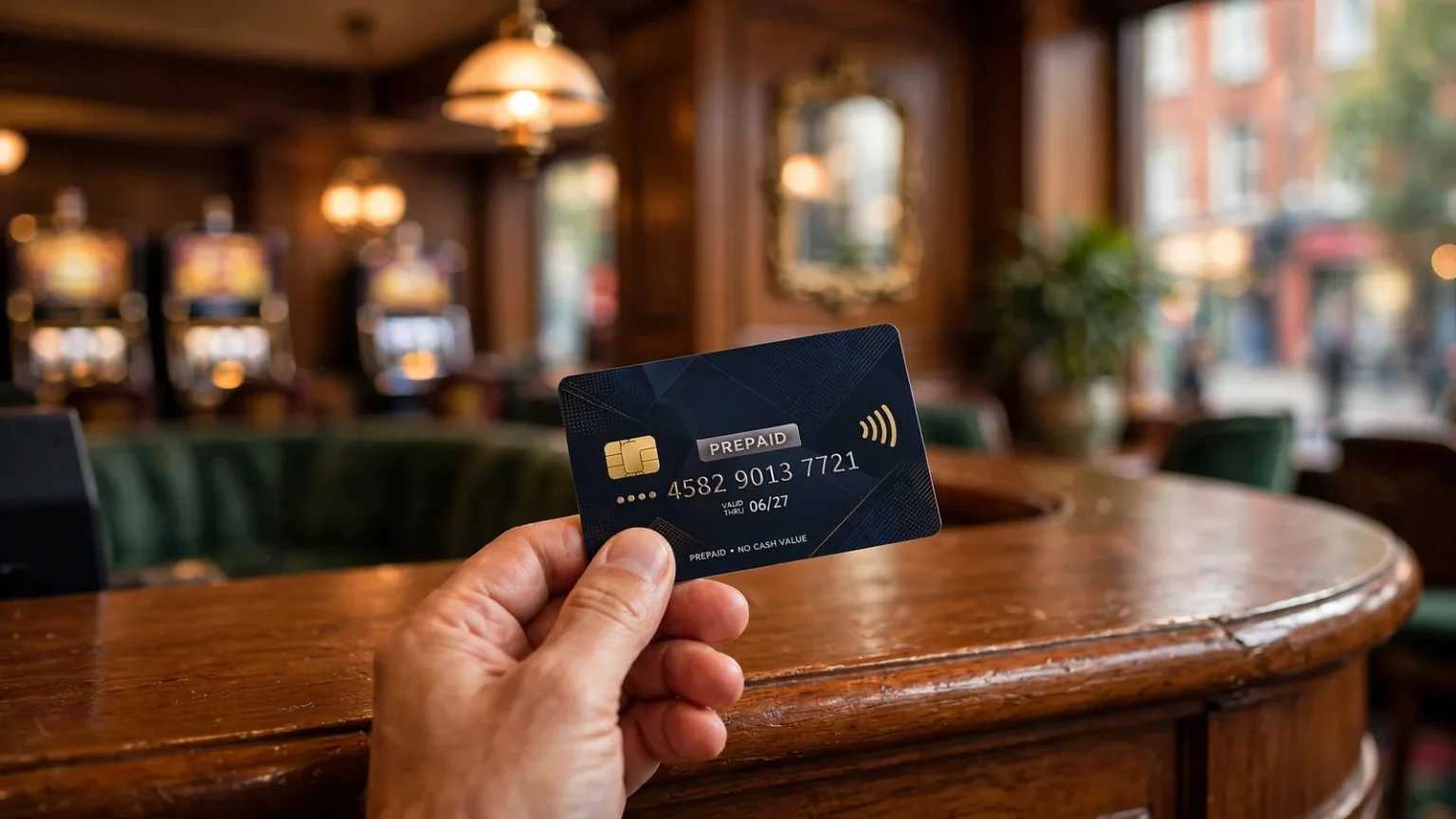
Upaycard availability depends on the operator and account, while withdrawal rules, bonus eligibility and alternative costs can also affect payment choice.
Is Upaycard Still a Real Option at UK Casinos?
The question of whether Upaycard works at a UK casino cannot be settled by a name on an old payment list or a general claim that a site accepts prepaid cards. Payment options are set by each operator, and the cashier is where current availability becomes concrete: it shows the routes attached to that casino account at the time of the attempted transaction. If Upaycard is not shown there, a mention elsewhere does not make it usable.
That distinction matters because payment information can outlive the arrangement it describes. A casino may revise its cashier, a payment provider may change its coverage, or a method may be available to some customers but not others. A page describing casinos that accept Upaycard in the UK may therefore be a starting point, not a dependable register of every site where the method works now. “All” is an ambitious word for a payment list that can change at the operator’s end.
The sensible test is specific rather than universal: does the named casino’s current cashier display Upaycard for the relevant account? A payment logo on a general page is less decisive. So is a listing that does not say when it was checked. Where the cashier offers no clear answer, the operator’s own payment information or support channel can clarify whether the method is currently available. That is not a promise that it will appear after registration; it is simply a way to separate a live option from a stale mention.
A specialist review can describe a site’s payment facilities, but it cannot make a method appear in an individual cashier. This is especially important when a page uses broad labels such as “prepaid”, “voucher” or “card”. Similar-sounding categories do not establish that Upaycard itself is accepted. Nor does a site’s support for one payment brand prove support for another. Payment systems are not interchangeable merely because their names suggest a family resemblance.
The same caution applies to casino lists promising the best Upaycard sites, bonuses or games. A ranking can make a neat editorial shape out of a messy operational question, but the relevant fact remains narrow: whether a particular operator currently presents Upaycard as a usable method. A bonus or a games catalogue cannot answer that. Those are separate features, and a promotional claim does not confirm payment compatibility.
Casino Payments & Withdrawals in the UK
There is also a larger distinction, often blurred in payment round-ups, between a casino operating legally in the UK and a casino accepting a particular payment route. For real-money gambling offered to customers in Great Britain, the operator must hold the relevant UK Gambling Commission licence. That legal status concerns the operator and its permission to serve the market; it does not certify that Upaycard is supported. Conversely, a payment logo does not establish that the site is licensed to serve UK customers. Two different checks, with different purposes.
The Gambling Act 2005 governs gambling in England, Wales and Scotland; Northern Ireland has a separate legal framework. For a UK-facing real-money casino, the practical point is that payment compatibility should not be treated as evidence of regulatory status. A casino’s cashier can answer what it accepts. The public register answers whether an operator holds a UKGC licence. Neither question can stand in for the other.
Entropay at UK Casinos: How to Check Availability
Card listings illustrate why this separation is useful. Visa and Mastercard appear in payment information associated with casino sites, but current UK availability and the eligibility of a particular card product still need to be checked in the cashier. A brand name alone is not a guarantee that every product carrying it can be used. The cashier is the place where the operator’s present options and restrictions meet the account in question.
Ownership details matter as well. Using account information and a payment route belonging to the same customer reduces the chance that basic identity mismatches will create avoidable friction. That is a plain administrative safeguard, not evidence that one particular payment brand is accepted. A method can be compatible in principle and still not be available for a particular account; accurate ownership information cannot turn an absent option into an available one.
So, are Upaycard casinos still available in the UK? The answer has to be established site by site, in the current cashier, rather than inferred from a broad list or from the casino’s UK presence. The method’s availability and the operator’s right to serve the market are separate facts. One screen cannot settle both.
Attention: A payment logo on a general page does not guarantee the method is currently available in your individual casino cashier.
Best casino sites in the UK
- BritsinoBonus: Welcome Package – Get your £2,200 + 2,000 FS · Payout speed: 1-3 business days
- BeOnBetBonus: 100% up to €500 + 100 FS · Payout speed: 1-3 business days
- Revery PlayBonus: 100% up to€1,000+ 100 FS · Payout speed: 1-3 business days
- EvoSpinBonus: 125% up to €2500 + 125 Free Spins · Payout speed: 1-3 business days
- WinBeastBonus: €5000 + 500 FS + €650 Freebet · Payout speed: 1-3 business days
- SpinFormulaBonus: 550% Up To £15,000 + 550 FS · Payout speed: 1-3 business days
- JetsetspinsBonus: 200% Bonus + 100 Free Spins + Free Royal Wheel · Payout speed: 1-3 business days
- NightWinBonus: £900 + 400 free spins · Payout speed: 1-3 business days
- NightLuckBonus: Welcome Pack + 805% Up To 6400€ + 280 FS · Payout speed: 1-3 business days
When the Cashier Offers Something Else
When Upaycard is not displayed, the cashier may still offer several ways to fund an account. These are not interchangeable versions of the same service: a debit card draws on a bank account, a bank transfer moves money through banking systems, a voucher is prepaid, and an e-wallet holds or routes funds electronically. The useful comparison is therefore not simply which logo looks familiar, but what each route is designed to do and what the cashier says it supports.
Debit cards are a familiar starting point. UK casinos commonly accept Visa and Mastercard debit cards, although the available card products and current acceptance still need to be confirmed in the individual cashier. A card may be recognisable without every issuer or card type being eligible. The distinction between debit and credit matters here: UK-licensed casinos cannot accept credit-card payments for gambling. A card logo alone does not settle what kind of card it is.
Casinos That Accept Debit Cards in the UK
Bank transfers and open banking offer a different route, connecting a casino payment to a bank account rather than to a card number. They can be presented as direct payment options, but the exact process depends on what the cashier makes available. A specialist review has described open banking and bank transfers as capable of providing instant deposits and fast withdrawals at many sites. That is a report about a changing service landscape, not a promise that every casino, bank or transaction will behave the same way. Some cashier labels may also refer to a payment service that initiates a bank payment rather than to a conventional transfer entered through online banking.
Prepaid vouchers suit a narrower purpose. Paysafecard is a voucher used for deposits only; it is not a route for receiving a withdrawal. That makes it distinct from methods whose functions may depend on the casino and payment provider. A voucher can separate a deposit from direct card or bank details, but its deposit-only character should be understood before it is selected. The cashier’s description is more useful than assuming that every listed method handles money in both directions.
E-wallets form another category, with Skrill and Neteller available at some sites. Their appearance in a cashier is not universal, and a specialist review has noted that these wallets are often excluded from promotions. That observation can change as terms and operator policies change, so the relevant casino’s own conditions remain decisive. PayPal is also valued in specialist coverage for speed and convenience, though a specialist review has reported that it may be excluded from bonus eligibility. These are separate matters: a payment option being present does not itself establish what promotional terms apply.
Some UKGC-licensed casinos also accept Apple Pay for deposits. It is a way to authorise a payment using a compatible Apple device and linked payment details, rather than a separate bank account in the ordinary sense. Its presence is not universal, and a deposit option should not be mistaken for confirmation that the same route will handle withdrawals. That distinction is a feature of payment systems, not a clerical irritation.
Debit Cards
Commonly accepted Visa and Mastercard products, though availability must be confirmed in the cashier. Credit cards are not permitted for gambling in UK-licensed casinos.
Bank Transfers
Direct routes connecting a casino to a bank account, including open banking for potential instant deposits and fast withdrawals.
Prepaid Vouchers
Deposit-only options like Paysafecard that separate deposit activities from direct bank or card details.
E-wallets
Electronic routes such as PayPal, Skrill, and Neteller, which may be subject to specific promotional exclusions.
The cashier is where these differences become concrete. It shows which methods are currently offered by that operator and may identify whether a displayed option is for depositing, withdrawing or both. Method names alone can be misleading: a payment brand can cover different services, while similar labels may lead to distinct providers or processes. Availability can also differ between casinos, even when both operate in the UK market.
For a player comparing alternatives to Upaycard, the broad choice is between familiar bank-linked routes, prepaid deposits and electronic wallets. Debit cards and bank transfers connect more directly to banking arrangements; a voucher is explicitly deposit-only; wallets can be available at selected casinos but may carry conditions of their own. None is automatically the best substitute for every account.
A method is useful only when its role fits the transaction being made. The cashier’s current labels, the operator’s payment terms and the provider’s own conditions together give a more dependable picture than a general list of logos. Familiarity helps. It is not a guarantee.
Deposits, Withdrawals and the Original-Source Rule
A payment method can appear in a casino’s deposit cashier without being available for withdrawals. The two transactions serve different purposes: a deposit moves funds into the gambling account, while a payout has to be sent through a route the casino can verify and is permitted to use. A logo beside a deposit option is not a promise of a matching cash-out route.
Casinos That Accept USDC in the UK: Payment Guide
That distinction matters when checking whether Upaycard can be used at a UK casino. Even if a particular cashier accepts an Upaycard deposit, its withdrawal instructions may require another route. The position can vary between casinos, and payment arrangements can change. The relevant information is the cashier’s current terms and the withdrawal options attached to the account, not an old list of casinos or a payment brand mentioned in isolation.
For UK-licensed casinos, the route money takes is also shaped by anti-money laundering controls. These commonly require a payout to go back to the original payment source. The principle is sometimes called a closed-loop rule: funds are not simply sent wherever a customer later prefers. Returning them to the source helps the casino check that the payment and the account belong together, and makes it harder to use gambling accounts to move money between unrelated parties.
This does not mean every deposit method can receive a payout. A payment service may be deposit-only at a particular operator, or the casino may need to use another verified route if the original source cannot accept withdrawals. In that case, the casino’s instructions matter: an alternative may involve additional checks, and a customer may need to establish ownership of the account receiving the money. The existence of a withdrawal button does not make every destination interchangeable.
The simplest arrangement is often one named account used consistently for deposits and withdrawals. Matching the casino account details to the payment account reduces the chance that basic ownership checks will interrupt the transaction. A difference in names, or an attempt to route money through another person’s account, can raise questions that a straightforward payment path would avoid. This is a matter of traceability, not merely cashier design.
Closed-Loop Rule
Anti-money laundering controls commonly require payouts to be returned to the original payment source to verify ownership and prevent fraud.
Upaycard users therefore need to separate three questions: whether the casino currently accepts the card for deposits, whether it can return funds to that same source, and what it requires if it cannot. Those answers are not interchangeable. A casino may permit a deposit while setting out a separate withdrawal route; another may not display Upaycard at all. Neither outcome can be inferred from the payment method’s general description.
The original-source rule can feel like a small piece of financial bureaucracy attached to a leisure account. It reflects a wider expectation in regulated gambling: money should have a legible path in and out. The cashier is where that path becomes specific to an account. Its deposit screen shows only one part of the arrangement; the withdrawal terms complete the picture.
Mobile Slots and the Payment Screen
A slot can open and run on a phone without the phone’s payment screen offering the method that funded, or might fund, the casino account. These are separate parts of the service: the game interface displays the slot, while the cashier handles transactions. A mobile-friendly casino therefore does not, by that fact alone, support Upaycard on mobile.
The distinction matters because payment availability can depend on the casino’s own cashier and the way its mobile site or app presents that cashier. A method mentioned on a general information page may not appear for every account or transaction. The useful check is the payment list shown after signing in, on the device being used, before trying to make a deposit. If Upaycard is absent there, the fact that slots load normally does not make it available.
Casinos That Accept Wirecard in the UK: What to Check
The reverse is possible too: a cashier may show a payment option even though a particular slot has not finished loading or does not display well on that device. That is a technical issue with the game or interface, not proof that the payment route is accepted. Keeping those questions apart prevents a familiar confusion: “the casino works on my phone” describes access to the site, not compatibility with every service inside it.
Some UKGC-licensed casinos accept Apple Pay for deposits, but that does not establish that every such casino offers it on every device, or that a particular account will see it. The same care applies to any named method. The cashier is the practical evidence of what the casino makes available at that moment; a payment logo elsewhere is not a promise that the option will be present in a mobile session.
Searches for online slots payable by Upaycard often bundle together three different questions: whether a casino is suitable for UK players, whether its games work on a phone, and whether its cashier accepts that payment method. The answer to one does not settle the others. In the UK, real-money casino services must be provided by operators holding the relevant UK Gambling Commission licence. That is a question of the operator’s legal status, not a test of a payment brand or a slot’s mobile layout.
Nor does a free-play version establish that a payment method works for real-money deposits. A game may be available to try without demonstrating anything about the cashier. “Free” and “pay by Upaycard” belong to different parts of the experience.
A sensible mobile check is unglamorous: confirm the operator’s status, open the cashier on the same device used for play, and see whether the named method is actually offered. If it is not, the smoothness of the game screen cannot fill the gap. The phone is only the doorway.
Do
- Confirm the operator holds a UKGC licence
- Check the cashier on the device you intend to use
- Verify availability after signing in
Don’t
- Assume mobile compatibility based on slot loading
- Trust general information pages over the live cashier
- Infer payment support from free-play mode
Real-Money Slots and the Limits Around Play
Real-money slot play at a UK-licensed casino sits within two kinds of limits: the rules governing an individual spin and the financial controls attached to an account. They serve different purposes. A stake cap restricts what can be put into a game cycle; an account limit lets a customer set a boundary on gambling activity. Neither is a feature of a particular payment card.
Remote gambling licensees must ask new customers to set a financial limit before they make their first deposit. The control must remain accessible at account level, rather than appearing once during registration and then disappearing into the furniture. It is part of the regulated account, whether the customer later plays slots on a phone or a desktop.
The prompt makes the first deposit a decision point. A casino cannot treat setting a limit as an optional afterthought for new customers. Account controls also matter beyond that first screen: they give a player a means of managing financial exposure while using the site. The limit is not a promise that play will remain harmless, nor a substitute for self-exclusion where gambling needs to stop altogether. It is one of the mechanisms through which a regulated service places boundaries around real-money activity.
There is also a statutory ceiling on online slot stakes in Great Britain. Since 9 April 2025, no adult may stake more than £5 in a single game cycle. That is a cap on the individual slot play, not a recommended amount, a deposit limit or a budget for a session. The law’s bluntness is deliberate: a game’s pace and presentation can make repeated spending feel less tangible than cash changing hands. The cap draws a line regardless of how a particular slot is designed.
Casinos that accept Giropay in the UK: cashier checks
This distinction can get lost when people look for slots they can play for real money using a named payment method. The cashier determines which payment routes an account can use; it does not set the slot stake cap or replace the casino’s account-level limit controls. A payment option cannot make play exempt from the rules, and a slot advertised as available on a mobile site remains subject to the same financial boundaries.
A “no deposit” offer is not a way around those boundaries either. Where real-money gambling is involved, the account and the game remain within the operator’s obligations. Nor does a free-play mode establish that a particular method is accepted for real-money deposits: these are separate questions, even when a casino places them close together on a screen.
The structure is characteristic of British gambling regulation: a licensed operator is expected to put controls into the account before play begins, while the law also limits the stake within the game itself. One concerns the customer’s chosen boundary; the other applies to everyone. A small but consequential distinction.
A Fast Deposit Does Not Promise a Fast Payout
A deposit can appear in a casino balance before the corresponding withdrawal has even entered the casino’s review process. The two movements travel in opposite directions and are not mirror images: an incoming payment may be authorised quickly, while money leaving an account can require checks before it is released.
Note: An instant deposit does not guarantee an equally fast payout, as withdrawals are subject to casino approval and account verification.
A specialist payment review describes a debit-card deposit as potentially instant, with a payout taking several business days. That contrast is a useful illustration, not a timetable that applies to every casino or transaction. The cashier’s deposit confirmation tells little about how quickly a withdrawal will be approved or delivered.
A payout has an internal stage. The casino must process the withdrawal request, and its approval procedure affects when the money is sent. The time shown by a payment provider, if one is shown, is therefore only part of the journey. A request that is still awaiting the casino’s decision has not yet reached the point where the provider can complete the transfer.
Verification can add another pause. Specialist casino guidance notes that a first withdrawal may take longer while the account is checked, and that payout speed depends in part on whether verification is complete. This is why a deposit that went through without delay does not establish that the account is ready for a withdrawal. The first transaction may be simpler than the first payout.
The distinction matters when comparing claims about instant deposits, including claims attached to a particular payment method. “Instant” may describe the moment funds reach the casino account; it does not promise an equally quick return. An account balance can update while the money remains subject to the casino’s approval process.
For an Upaycard-related deposit, the same caution applies: a successful payment would show that the deposit was accepted, not that a withdrawal through that route will be available or equally quick. A payment screen cannot settle the payout timetable. That depends on the casino’s handling of the request, the state of account verification and the time required after approval.
Casinos That Accept UKash in the UK: How to Check
A sensible estimate comes from the casino’s own withdrawal information, read alongside any stated processing steps. If a withdrawal remains pending, the relevant question is whether it is still with the casino or has been sent onward. Those are different stages, and treating them as one produces a misleading picture of speed.
Quick in. Not necessarily out.
Bonuses and the Payment Methods That May Miss Out
A payment option appearing in a casino cashier does not mean it qualifies for every promotion. The cashier answers whether a deposit can be made; the bonus terms answer whether that deposit counts towards an offer. They are separate decisions, sometimes set out in separate parts of the same account.
That distinction matters when looking for an Upaycard welcome bonus in the UK. Even if a casino accepts Upaycard for real-money deposits, its promotion may name a different set of eligible methods, or exclude a particular payment route. Acceptance alone is not evidence that a deposit will trigger a welcome offer, free spins or another reward.
Specialist reviews have reported that PayPal can be excluded from bonus eligibility, despite its popularity as a payment option. The same kind of review reports Skrill and Neteller as often excluded from promotions at sites where they are available. These are not universal rules: terms differ between operators and can change. The current offer’s own conditions are the deciding text, not a general description of a payment method.
Payment acceptance is separate from bonus eligibility; some methods, such as PayPal, Skrill, or Neteller, may be excluded from promotional offers.
For an Upaycard deposit, the useful detail is the wording attached to the specific offer. It may say which methods qualify, whether a code must be entered, and whether the bonus applies only to a first deposit. If the terms list exclusions, those matter as much as the headline. A promotion can be visible on the casino’s page yet unavailable for a deposit made by a particular route.
The same care applies to searches for an Upaycard slots bonus code or a no-deposit bonus. A code is not proof that every payment method is eligible; a no-deposit offer, by definition, may not depend on a deposit at all. Its own conditions still determine who can claim it and what restrictions apply. The label is not the contract.
For anyone comparing slots sites that accept Upaycard, bonus eligibility should therefore be checked after payment acceptance, not inferred from it. If the offer’s terms do not clearly explain how the chosen method is treated, the promotion remains uncertain. A modest distinction, but a consequential one: the deposit may go through while the advertised extra does not.
Small Deposits, Minimums and Maximums
Deposit size is set by the cashier, not by a universal rule for UK casinos. A specialist review places the usual starting minimum in the £10–£20 range, with the payment method affecting where a particular deposit falls. That is a guide to the scale of common minimums, not a promise that every cashier will accept the same amount.
UK Casinos That Accept Boku Pay by Phone
A £5 deposit therefore cannot be assumed to work simply because a payment card or wallet is available. The cashier’s stated minimum is the operative figure for that transaction. Where Upaycard is shown, its own displayed terms matter; the name of a payment method does not establish a lower threshold. Minimums may differ between methods at the same casino, and the amount entered can be rejected if it falls below the figure shown.
Maximums are less tidy. A casino may set a cap for one transaction and separate limits for deposits across a day or month. The payment method can affect those ceilings, while account status may also determine what is permitted. A number advertised in a general payment guide can therefore be a poor substitute for the limit visible in an individual account.
This is an administrative boundary, but it reflects a broader feature of gambling online: access is mediated through accounts, and the account has its own rules. A method may be listed without the cashier accepting every amount entered against it. The apparent simplicity of a deposit button conceals a small schedule of conditions.
Before confirming a deposit, the amount, currency and applicable minimum or maximum should be visible in the cashier. If the chosen amount is outside the permitted range, changing the payment route may change the available threshold; changing the amount may be the simpler answer. The relevant figures are those attached to the current account and method, not a remembered limit from another casino.
For anyone looking specifically for a small Upaycard deposit, the practical question is not whether a low figure appears in a search result. It is whether the casino’s live cashier displays that amount as acceptable for the selected method. Small print, in this case, is the cashier itself.
Deposit limits and thresholds
Minimum deposits typically range from £10 to £20, but specific thresholds depend on the cashier and selected method. Maximums may be set per transaction or across a daily/monthly period based on account status.
Comparing the Cost of an Alternative
If Upaycard is not available in a casino’s cashier, the next option should not be judged by the label “free” or by the absence of a visible charge. A payment route can carry costs at several points: the casino may charge a fee, the payment provider may take one, and the card issuer or bank may apply its own charge. Currency conversion and, where relevant, network fees can add further expense. The checkout screen shows only part of the journey.
A specialist payment review identifies these as possible cost components, rather than a fixed tariff shared by every casino and provider. That distinction matters. One route may have no stated flat fee at the casino while converting the transaction at a less favourable rate. A conversion spread can outweigh a clearly displayed charge, making the apparently cheaper choice more expensive overall.
The comparison therefore has to match the intended transaction. The relevant question is not which method has the smallest fee in isolation, but what the same payment would cost through each available route. Casino charges, provider terms, issuer or bank fees, exchange rates and network costs all belong in that calculation. A fee listed by one party does not reveal what another party may deduct.
The word “alternative” can also create a false sense of equivalence. A payment method that appears beside another in the cashier may have a different fee structure, and the cost can depend on the payment route and currency involved. The cashier’s displayed terms and the provider’s own pricing are separate pieces of information; neither should be treated as a complete bill by itself.
There is no universal lowest-fee replacement for Upaycard. Even where two methods appear to accept the same transaction without a casino charge, the final amount can differ once provider fees and conversion are counted. The least costly option is the one whose total cost is clear for the actual payment, not the one whose headline price looks neatest.
That is less satisfying than a league table. It is also more honest: a supposed “best” alternative can change with the casino, the payment provider and the currency, so a fixed winner would promise more than the evidence supports.
Casinos That Accept AstroPay in the UK
Payment Choice Does Not Reveal GamStop Status
An Upaycard button in a cashier says something about the payment route the operator makes available. It does not establish whether a casino is connected to GamStop, whether the operator holds a UK licence, or what self-exclusion arrangements apply. The same is true of any other payment method: a logo is not a regulatory record.
That distinction matters when searches for casinos outside GamStop are paired with a particular deposit method. A casino that appears to accept Upaycard cannot be treated as a verified non-GamStop site on that basis, nor does a payment option make an unlicensed operator suitable for British customers. Remote gambling licensees serving Great Britain must hold the relevant UK Gambling Commission licence; legal online casino gambling in the UK is confined to licensed and regulated sites.
The useful check is the operator’s status, not the shape of its cashier. The UKGC public register provides the place to verify an operating licence before depositing. Payment compatibility and regulatory status answer different questions, even when a site presents them side by side.
Payment-source checks have their own purpose. Casinos may return money to the account or instrument that funded it as part of anti-fraud and anti-money-laundering controls. If that route cannot be used and another payout source is proposed, further checks may follow. Keeping account details and payment ownership aligned can reduce avoidable friction, but it does not establish anything about GamStop.
Self-exclusion is not a payment puzzle. Trying another card, voucher or wallet does not prove that an operator is outside the scheme, and a cashier cannot verify the status of a person’s self-exclusion. Treating a payment route as a workaround confuses identity checks with safeguards intended to restrict gambling.
The distinction is less dramatic than a list of supposed non-GamStop casinos, but more reliable. A payment method can show what a cashier currently accepts. It cannot certify who regulates the casino, or what protections govern the account. A logo is only a logo.
What is the fastest withdrawal method for UK casinos?
PayPal, open banking and debit cards linked to fast payout systems are generally among the quickest options. The casino’s approval process and your verification status also affect how soon you receive the money.
Which payment methods are accepted in Great Britain?
Options at UK casinos can include Visa and Mastercard debit cards, PayPal, bank transfers or open banking, and e-wallets such as Skrill and Neteller; some sites also offer Apple Pay. Check the casino’s cashier for the methods available to your account.
Can I deposit in GBP?
Yes, GBP is supported. Confirm your account currency before making a payment to avoid conversion costs.
Which method has the lowest fees?
There is no single payment method that is always cheapest. Compare the casino’s charges, provider or bank fees, currency-conversion spread and any network costs for the amount you plan to transfer.
Material created by the team Pure Casino UK Guide


