

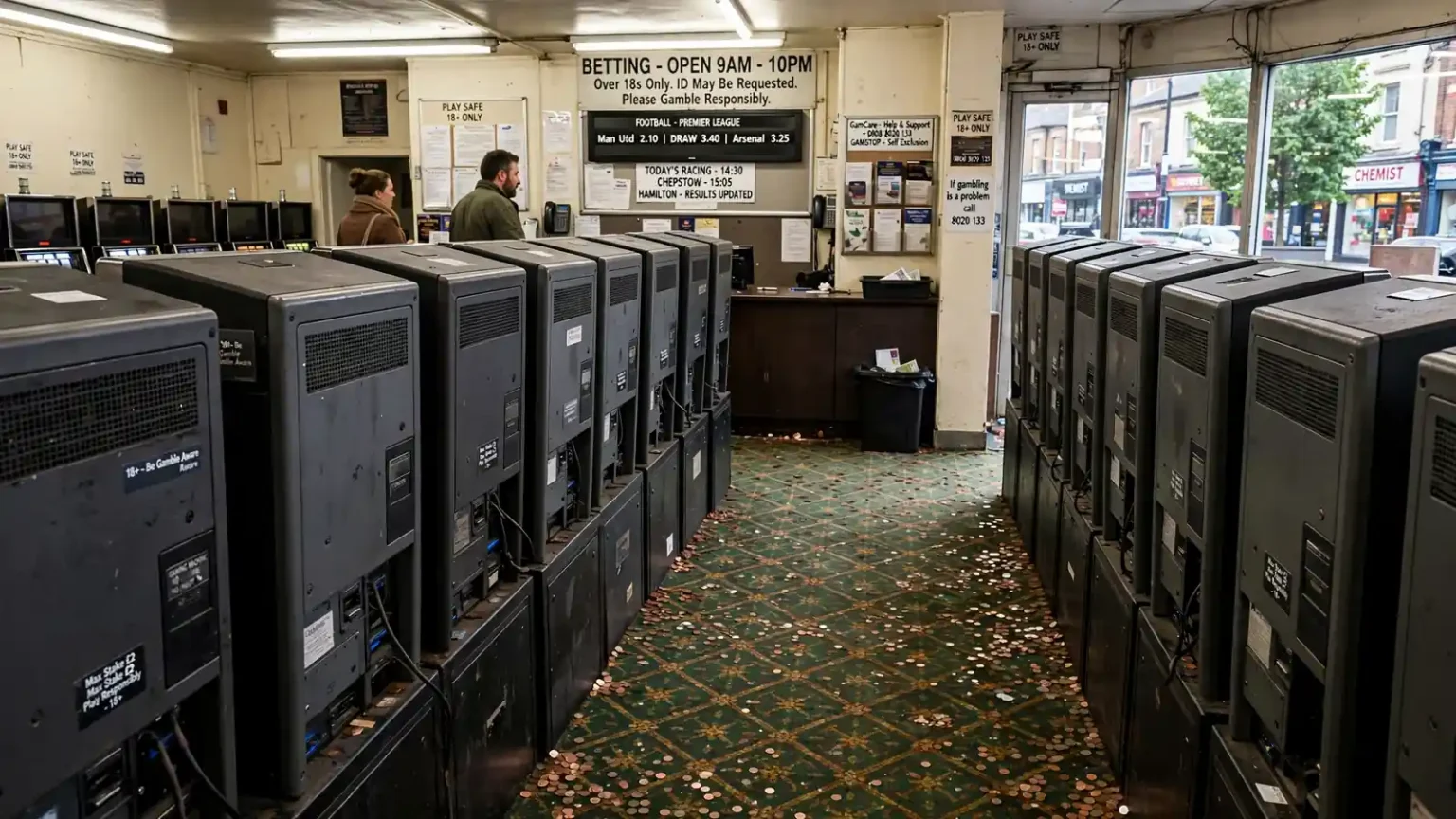
A penny label can refer to a betting unit, while the full spin cost depends on the game’s stake structure.
What Counts as a Penny Slot in the UK?
“Penny” sounds as if it should settle the price of a spin. It does not. On a slot, the word may describe the smallest amount attached to a line or betting unit, while the total cost of a spin depends on how the game’s stake is arranged. A penny can be the starting piece of the calculation without being the final sum.
For a practical definition, a specialist review uses a clear threshold: a penny slot is a game whose minimum spin costs 20p or less. That makes the term useful without insisting that every spin must cost exactly one penny. It also separates the label from a literal reading of the machine’s name. A game can qualify even when its lowest playable spin is more than 1p, provided the total remains within that threshold.
The distinction matters because a slot’s stake may be built from several parts. A player may select a stake per line, and a game may have multiple lines active for a spin. The line amount is therefore not necessarily the amount spent on the whole spin. The machine’s arrangement turns a small unit into a total cost; the word “penny” can describe the unit while leaving the total unstated.
That is the small piece of arithmetic behind a great deal of loose language. A screen or description may foreground the smallest coin-sized stake because it is easy to understand and sounds modest. Yet a penny per line does not, by itself, tell the whole story. The relevant figure for deciding whether a game fits the practical definition is its minimum cost for one complete spin.
This approach is especially useful when comparing penny slots in the UK across different formats. A physical machine and an online game may present their controls differently, but the working question remains the same: what is the least that can be staked to complete a spin? If that minimum is 20p or less, the game falls within the definition. If the visible penny figure is only a component and the minimum total exceeds the threshold, the label is less informative.
Fruit machine slots in the UK: from pubs to online
The threshold is a practical convention, not a special class of machine with a separate design. “Penny slot” does not mean that every symbol, line or feature is priced at one penny, nor that each spin must be limited to that amount. It is a way of grouping games by their minimum entry cost. The measure is the least complete spin, not the most prominent small number in the betting controls.
This helps make sense of phrases such as 1p slots. They point towards the smallest stake a game advertises or permits, but they do not necessarily describe the full cost of playing a round. Where a slot offers several lines, the selected line stake and the number of lines in play work together. A one-penny line stake can therefore sit inside a larger total. The label only becomes clear once the full minimum spin cost is known.
Online descriptions can make the same distinction harder to notice. A game tile may highlight a low starting stake, while the controls that determine the complete spin cost appear after the game opens. The number that matters for this definition is not an attractive fragment of the stake, but the least amount required for one finished spin. Without that distinction, “penny” risks becoming a mood rather than a measure.
There is a cultural neatness to the name. The penny has long served as shorthand for something small enough to seem incidental, and gambling language inherits that ease. But a small denomination is not the same thing as a small total. The label is most useful when it is treated as a starting point for checking the minimum spin cost, rather than as a promise that the whole game runs on pennies.
Progressive Slots Online in the UK: How Jackpots Work
So, in this article, a penny slot means a slot with a minimum spin cost of 20p or less. Its line stake helps form that cost, but does not necessarily equal it. That definition gives the phrase a practical boundary while leaving the game’s particular stake arrangement to be read on its own terms. A modest label. A total still matters.
Best casino sites in the UK
- BritsinoBonus: Welcome Package – Get your £2,200 + 2,000 FS · Payout speed: 1-3 business days
- BeOnBetBonus: 100% up to €500 + 100 FS · Payout speed: 1-3 business days
- Revery PlayBonus: 100% up to€1,000+ 100 FS · Payout speed: 1-3 business days
- EvoSpinBonus: 125% up to €2500 + 125 Free Spins · Payout speed: 1-3 business days
- WinBeastBonus: €5000 + 500 FS + €650 Freebet · Payout speed: 1-3 business days
- SpinFormulaBonus: 550% Up To £15,000 + 550 FS · Payout speed: 1-3 business days
- JetsetspinsBonus: 200% Bonus + 100 Free Spins + Free Royal Wheel · Payout speed: 1-3 business days
- NightWinBonus: £900 + 400 free spins · Payout speed: 1-3 business days
- NightLuckBonus: Welcome Pack + 805% Up To 6400€ + 280 FS · Payout speed: 1-3 business days
The Online Lobby: Stakes and Game Information
A search for real-money penny slots online often ends not at a single game but in a lobby: a catalogue of titles arranged for browsing. The distinction between a low-cost game and a low-cost spin is not always obvious from a tile or title. A game may be marketed as suitable for small stakes, while the detail that matters for a particular session sits behind its information panel. The lobby is therefore less a shop window than a set of labels that need reading.
For each game, a specialist review reports that the lobby should show its minimum stake, maximum stake and Return to Player (RTP). UKGC rules also require operators to make RTP information available to players. These details describe different things. The minimum stake identifies the lowest permitted wager for that game; the maximum marks the upper end of its stake range; RTP is a percentage attached to the game. A title’s name or artwork cannot substitute for any of them.
That distinction matters when browsing online penny slot games in the UK. “Penny” suggests a small entry point, but the label alone does not establish the lowest selectable stake. The minimum stake displayed for the game is the relevant starting detail. The maximum is a separate piece of information, not a warning that every spin costs that much. A lobby can place games side by side; it cannot make their stake settings identical by doing so.
Classic Slots Online in the UK: Reels and Rules
The figures may be found in a game’s information panel rather than in the main tile. A quick browse can therefore create a misleading impression: prominent graphics and a short description are easy to see, while practical terms take another click. The useful comparison is not between themes or names but between the information attached to each title. If a game is being considered as a penny slot, its listed minimum stake is the first detail to inspect; the maximum stake and RTP complete the basic picture.
RTP is a game-level measure, not a forecast for an individual session. Its presence in a lobby gives players information about the game, but it does not tell them what a particular sequence of spins will produce. That interpretation belongs to the question of payouts, rather than to the job of the lobby itself. Here, the point is simpler: RTP should be available as part of the information accompanying the game, not left to guesswork from its name or presentation.
The lobby also creates a small problem of comparison. A compact tile may make several games look equally suitable for low-stake play, even when their minimums differ. A game’s visual style, popularity badge or position in a category says nothing by itself about the stake needed to begin. New online penny slots may attract attention because they are new; that does not make them cheaper, nor does a familiar title necessarily have a lower minimum. The displayed game information is more useful than the surrounding sales language.
Operators may organise catalogues in different ways, but categories are not evidence of a game’s cost. A label such as “new”, “featured” or “popular” describes how the game is being presented, not its stake range. The same applies to search and sorting tools where available: they can help narrow a catalogue, but the individual game details still need to be checked. A penny slot is not defined by a bright coin in its artwork.
Minimum Stake
Identifies the lowest permitted wager for the game; the primary detail for identifying penny slots.
Maximum Stake
Marks the upper end of the game’s stake range.
RTP
A percentage representing the long-run share of all wagered money the game is designed to return.
This is where the wording “online casino penny slots” can blur two separate matters. The casino is the setting; the game’s own information describes the stakes and RTP attached to it. A lobby is useful when it makes those details visible and consistent across titles. It is less useful when the eye is drawn first to decoration and only later to the terms that determine whether a game suits a small-stake preference.
The practical habit is to open the game information before treating a title as a real-money penny slot. Read the minimum stake, note the maximum, and locate the RTP. If any of these details are not readily apparent, the game’s branding cannot fill the gap. No list of “best” titles can replace that check: suitability depends on the figures shown for the particular game, not on a universal ranking.
A lobby is a catalogue, but also a disclosure surface. Its best service is not to make every game look inviting; it is to make their terms legible enough to compare. The small print does the useful work.
Penny Slots in UK Casinos: The Licensing Framework
A penny slot may look like a small, private amusement: a few coins’ worth of play, bright symbols and a result delivered in seconds. Online, though, that apparently modest encounter sits inside a much larger arrangement. The operator providing the casino service is subject to gambling law, and the rules concern the business behind the screen as much as the game on it.
In Great Britain, the Gambling Commission is the principal regulator of commercial gambling. The Gambling Act 2005 provides the legislative framework in England, Wales and Scotland. Northern Ireland is outside that Act’s scope, so the position should not be casually described as though one statute governs every part of the United Kingdom.
Novomatic and Amatic Casinos in the UK: What to Know
For online casinos serving customers in Great Britain, the important point is that a company’s address does not decide whether it needs permission. A remote operator selling gambling to the British market must hold the relevant Gambling Commission licence, whether the company is based in Britain or elsewhere. An overseas office is not a route around the rules. The online service is being offered into a regulated market, and the operator must meet that market’s licensing requirements.
This is why the phrase “penny casino slots UK” refers to more than a style of game or a low stake. A legal online casino serving British players operates under a current licence from the UK Gambling Commission. The licence is not a badge bestowed on every site that happens to accept a British payment or display familiar language. It is the basis on which the operator may offer real-money gambling here.
The distinction matters because websites can resemble one another while standing in very different legal positions. An operator holding a UKGC licence is accountable within the British regulatory framework; an offshore casino without that licence is outside it. The licensing requirement applies to the business offering the gambling, not merely to the software used to make a slot spin. A recognisable game interface cannot establish that the casino itself is authorised.
The Gambling Commission’s role is therefore broader than maintaining a list of names. It is the regulator responsible for commercial gambling in Great Britain, and its licensing system sets the conditions under which operators may serve customers. The framework also makes clear that online gambling is lawful only through appropriately licensed and regulated sites. In that sense, the licence is not decorative legal text at the bottom of a webpage. It is the dividing line between an operator permitted to serve the market and one that is not.
Licensing
A remote operator selling gambling to the British market must hold a relevant Gambling Commission licence regardless of where the company is based.
A practical check begins with the operator’s own licence information. UK-licensed operators are required to show their licence number in the website footer and link it to the Gambling Commission’s register. The register provides a way to check the named business against the regulator’s records, rather than relying on a logo or a statement written by the site itself. That small piece of website furniture carries more weight than it appears to.
Licensing also reaches the moment before play begins. A remote operator must gather information that establishes a customer’s identity before allowing that customer to gamble. This is not simply an administrative flourish added after registration. Identity checks form part of the regulated entry to real-money play: the operator has to establish who is using the account before gambling can take place.
That requirement gives the online casino a distinctly modern kind of doorway. A physical casino has a visible entrance and staff who can see who has walked through it. A website has neither a door nor a doorman, so identity has to be established through information instead. The process may feel less theatrical, but it serves a basic purpose: the operator must know the customer before offering gambling.
The framework is also a reminder that “casino” is a legal category, not just a visual style. The Gambling Act describes a casino as an arrangement that gives people the opportunity to take part in one or more casino games. Online slots fall within that broader commercial setting; the fact that a game is reached from a phone rather than a gaming floor does not remove the operator from regulation.
Stakelogic Slots in UK Casinos: Provider Explained
Questions about the best penny slots in the UK, or whether a penny slot casino has a particular atmosphere, belong to the language of choice and preference. The licence question comes first. It establishes whether the business is authorised to offer real-money gambling to customers in the British market at all. Game names and casino branding cannot answer that.
Nor does the smallness of a stake change the status of the service. A low-cost spin remains gambling when money is staked and an outcome is produced. “Penny” describes a way people talk about the play; it does not create a separate, lightly regulated category of casino. The law is less impressed by the size of the coin than by the nature of the arrangement.
So the licensing framework is not a guide to finding a particular game or predicting what a spin will return. It is the structure around access: which regulator oversees commercial gambling in Great Britain, which operators may serve that market, and what must happen before a remote customer is permitted to gamble. Small stakes. Serious paperwork.
Playing Carefully When Every Spin Is Random
The appeal of a penny slot is partly arithmetic and partly psychological. A small stake can make a session feel less exposed: each decision appears modest, and a losing spin may seem easier to shrug off. But the scale of the stake changes the money committed, not the underlying advantage of the game. The house edge remains the same at penny stakes as it does at any other stake.
Choosing a smaller stake reduces the risk per play, but it does not change the house edge or make the game more favourable in percentage terms.
That distinction puts a boundary around strategy. Choosing a smaller stake can reduce how much is risked on each play, but it cannot make the game more favourable in percentage terms. A run of wins may arrive; a run of losses may arrive too. Neither proves that a method has taken control of what happens next. Randomness is not a puzzle that yields to patience, a pattern spotted in recent results, or a carefully chosen sequence of bets.
The phrase “best way to play penny slots” often suggests that there is a system hidden in the choice of timing, stake or game. In practice, a sensible approach is less dramatic: decide what amount can be spent without consequence, keep the stakes within that boundary, and stop when the planned session ends. Those choices can shape the cost and duration of play. They cannot convert chance into a dependable source of income.
There is no universal shortlist of penny slots that makes the odds kinder. Games may differ in presentation and pace, but preference is not an advantage. A lively theme, frequent small wins or a long bonus sequence can make play feel more active; none guarantees that the next spin will reward the same pattern. The machine does not remember a losing streak and owe a recovery. It has no memory to appeal to.
This is also why “how to play” needs a modest answer. The rules of a game explain which symbols or features count, while a strategy can set limits on spending and time. Neither supplies a reliable prediction of results. Treating a sequence of past spins as a forecast is a particularly tempting error: human attention is built to find patterns, including in events that do not offer a usable one.
Amatic Casino Games: How UK Casinos Offer Them
Whether penny slots are worth playing is therefore a question of entertainment, not expected profit. If the attraction depends on believing that a clever tactic will eventually secure a return, the premise is fragile. If the cost is treated as the price of a leisure activity, the decision rests on a clearer basis. Even then, a low stake is not a shield against spending more than intended over a long session.
The same caution applies to searching for the “best” penny slot to play in the UK. A title can be appealing without being a better bet. There is a quiet difference between choosing a game because its style is enjoyable and choosing it because it is expected to beat chance. The first is preference. The second is a promise the mathematics does not make.
Careful play is not a winning system. It is a way of keeping the purpose of the activity visible while chance does what chance does. Small stakes can make each decision smaller. They do not rewrite the rules.
Free Penny Slot Games: What the Practice Version Can Show
A free version of a penny slot can make an unfamiliar game legible before money enters the picture. Where a practice mode is available, it lets a player see how the screen is arranged, what the symbols look like and how the controls respond. It may also show how a feature is introduced or what information appears after a spin. That is useful orientation, not a rehearsal for a future result.
The distinction matters because a slot’s visible sequence can feel like a story: symbols fall into place, a sound rises, a near-match appears. In practice play, that story still belongs to the interface. It does not reveal what the next paid spin will do, or whether a particular pattern is becoming more likely. Slot outcomes are determined by a random number generator certified by an approved testing laboratory. A run of wins or losses in a free session is not a forecast.
Do
- Use practice mode to check layout and navigation
- Verify if instructions and features are clear
- Assess if the design is understandable
Don’t
- Use a free session to forecast future results
- Assume a run of wins in demo mode is typical
- Believe that practice play reveals a winning system
Practice mode can still answer modest, practical questions. Is the game’s layout easy to follow? Are its instructions clear? Does a feature interrupt the ordinary screen, and where does the game explain what is happening? These are observations about presentation and navigation. They can help distinguish a game whose design makes sense from one that feels needlessly obscure.
They cannot establish that the game is generous, that its paid version will behave like a practice session, or that a player has learned a reliable way to win. Free play removes the financial consequence of a spin; it does not remove randomness. Nor does a session prove that a memorable sequence is typical. The mind is an efficient editor, and it tends to keep the dramatic scenes.
People looking for penny slot games online in the UK may encounter free versions alongside real-money games, but availability and the precise form of a demo can differ. A practice screen may use virtual credits or another non-cash display; those figures are not money that can be withdrawn. Its purpose is to show the experience of operating the game, not to recreate a promise of earnings.
That makes “best” a poor verdict to draw from free penny slot games. A demo can help someone judge whether the presentation is understandable or enjoyable. It cannot rank games by future luck. The useful evidence is about the game’s design, not its next outcome. A small distinction, with consequences.
The Penny Is Not the Maximum Bet
“Penny” describes a low-value denomination, not a promise that every spin costs a penny or that the stake cannot rise. A penny slot can offer a small starting stake while also allowing larger bets. The label tells little about the highest amount available: that depends on the game’s permitted stake settings and the rules that apply to the player.
Betsoft Casinos in the UK: What Can Be Verified
For online slots in the UK, the maximum stake per spin is £2. There is also an age-based cap on the amount staked in a game cycle: £5 for customers aged 25 and over, and £2 for those aged 18 to 24. These are limits, not recommended amounts, and the higher cap does not mean every game allows a stake at that level.
The distinction matters because “penny” is often read as a ceiling when it is better understood as a description of the small-unit end of play. A game may be classed as a penny slot because it offers a low-cost way to begin; that does not turn its smallest denomination into a rule governing every available choice. A larger stake remains possible within the applicable cap.
Nor does the word “machine” change the point. In an online casino, a penny slot machine is still a slot game presented through software. Its name or denomination does not override the limits that apply to online slot play. The maximum is governed by the stake rules, not by the marketing shorthand attached to a game.
This is why penny slot machine tips should begin with the distinction between a low entry point and the amount selected for play. Treating the word “penny” as a guarantee of a tiny total stake can create a false impression; treating the legal cap as a target would be no better. A stake can be below the limit and still be more than the smallest option.
Stake Limits in the UK
For online slots, the maximum stake per spin is £2. There is also an age-based cap on the game cycle: £5 for customers aged 25 and over, and £2 for those aged 18 to 24.
A careful reading keeps three ideas separate: the denomination signals a small unit; the chosen stake is the amount put into play; and the applicable maximum is a regulatory boundary. Those ideas are related, but none substitutes for another. “Penny” is a label, not a limit.
Bonus Rounds, Free Spins and the Wagering Ceiling
A bonus round and a promotional bonus are not the same thing. A game may offer a bonus feature during play, while an operator’s promotion may supply bonus funds or free spins under separate conditions. The shared word “bonus” makes them sound like one promise; the terms decide what each actually means.
For bonus funds at UKGC-licensed operators, a specialist review describes a wagering ceiling of 10×. That figure concerns wagering requirements attached to bonus funds, not a guaranteed return or a number of spins. Where such a requirement applies, it sets the amount of qualifying play required before the bonus funds or associated winnings can be withdrawn, subject to the offer’s stated rules.
Free spins need their own reading. The offer should say which games they apply to, when they expire and what happens to any winnings. A game with a bonus feature does not, by itself, provide promotional free spins; nor does a free-spin offer necessarily mean that every resulting win is immediately withdrawable. Conditions matter more than the label.
The arithmetic is plain, though the presentation can be less so. A wagering multiple is applied to the relevant bonus amount, and the offer’s terms should identify what counts towards that requirement. If the wording is unclear about whether it applies to the bonus, winnings or both, the offer is not clear enough to assess.
Online Craps Casinos in the UK: What Can Be Verified
The ceiling is useful because it limits one part of promotional conditions. It does not make an offer valuable by itself, remove other restrictions or turn a game feature into cash. Free penny slots with bonus rounds may describe a game experience; a real-money promotion is a different arrangement, with its own eligibility and withdrawal terms.
Promotional language tends to put the bright part in large type. The conditions sit elsewhere.
How Spin Costs Add Up
A penny stake can sound like the whole price of a spin, when it may describe only the amount placed on each line. Where a slot offers multiple paylines and charges a separate stake for each active one, the total is the line stake multiplied across those lines. The small denomination is real; so is the arithmetic.
Take a game with twenty paylines and a stake of one penny on each. A spin then costs twenty pence, not one penny. That difference matters because a label centred on the per-line amount can make the entry cost seem smaller than the sum actually taken for a spin. The useful figure is the total stake shown for the selected setup.
Not every game presents its stake in the same way. Some interfaces make the total clearer than others, while the number of active lines or the chosen stake may change the amount charged. The relevant comparison is therefore not simply “penny or not”; it is how much the particular combination costs when the spin is made. A penny is a unit, not a complete price tag.
Calculating Total Stake
Identify Line Stake
Determine the amount placed on a single line, such as one penny.
Count Active Lines
Identify the number of paylines active for the spin, for example, twenty lines.
Multiply for Total
Multiply the line stake by the number of lines (1p × 20) to find the total cost of the spin (20p).
Online slots in the UK have no legally prescribed floor for the stake. That leaves the minimum available amount to the game and operator, rather than to a national minimum-stake rule. It does not mean that every game can be played for the same tiny sum: line structure and the options presented in that game determine the practical starting cost.
The wording around stakes can be quietly misleading without being false. “One penny per line” describes one component, not necessarily the amount deducted for the full spin. A clear calculation keeps the two ideas apart: the rate attached to each line, and the combined cost of playing the chosen set of lines. The distinction is modest on the screen, less modest in the account balance.
Penny Slot Payouts and RTP
A slot’s Return to Player (RTP) describes the share of all money wagered that the game is designed to return across its lifetime. It is a long-run measure, not a forecast for a particular session. A player may put money through a game and receive less, more, or nothing back; the published figure does not promise a personal result.
That distinction matters when penny slot payouts are being weighed against the smallness of the stake. A low-cost spin can still lose, and a sequence of spins can diverge sharply from the game’s stated RTP. The measure gains meaning across the vast number of wagers made over the game’s lifetime, not as a ledger for one person’s evening.
The stake does not alter the game’s RTP. The developer sets that figure, and increasing or reducing the amount wagered changes the money involved, not the underlying return measure. A penny stake therefore does not make a slot more generous, just as a larger stake does not improve its stated RTP. It scales the possible financial result around the same game setting.
Slots & Providers: UK Casino Game Guides
Jackpots belong to a different kind of expectation. A prominent top prize may attract attention, but RTP alone does not say when a jackpot will be won, who will win it, or how likely a particular spin is to trigger it. Nor does a long-term return figure guarantee that any portion of a player’s own stake will come back. The number is about the game’s aggregate design, not a promise attached to an individual outcome.
This is why comparing penny slot jackpots by headline prize alone can tell little about the experience of playing. RTP provides a useful measure of long-term return, but it cannot turn chance into a schedule. The figure is informative; it is not a receipt.
Limits and Breaks on Mobile Slot Play
A penny slot machine online may fit into a few moments on a phone, but the small screen does not make the money or the time less real. The safeguards attached to an account matter more than the size of the symbols.
UK-licensed operators must assess whether a customer’s gambling remains sustainable, using patterns of income and expenditure. This is not a judgement on a single spin. It is an attempt to notice when gambling is no longer sitting comfortably alongside the rest of a person’s finances.
UK Online Casino Ratings: Amatic Games and Rules
Operators must offer deposit limits, time-outs and reality checks. On mobile, deposit limits, session timers and self-exclusion must work with the same functionality as on desktop. These tools are not merely settings tucked away for the moment when something has already gone wrong: account-level limits should remain accessible, and new remote customers should be prompted to consider a financial limit before making a first deposit.
A deposit limit places a boundary on money added to an account. A session timer makes elapsed play visible; a reality check interrupts the smooth succession of spins with a reminder that time has passed. A time-out pauses access for a chosen period, while self-exclusion is intended to stop gambling altogether across participating sites. GamStop provides a route to self-exclusion from participating operators.
The mobile interface can make play feel private and frictionless. The protections are designed to restore a little friction, and to make stopping an available action rather than a distant intention. No screen can decide what a person can afford. It can, however, make limits easier to set and harder to overlook. A modest intervention.
What is the maximum stake allowed on online slots in the UK?
The maximum stake per spin is £2. The game-cycle cap is £5 for players aged 25 and over, and £2 for players aged 18 to 24.
What is the maximum I can stake on Amatic slots under UK rules?
The maximum stake per online slot spin is £2. The game-cycle cap is £5 for players aged 25 and over and £2 for those aged 18 to 24.
What is the minimum stake on a penny slot?
There is no statutory minimum stake for online slots in the UK. The minimum for a particular game is shown in its lobby information, and a practical penny slot has a minimum spin cost of 20p or less.
Material created by the team Pure Casino UK Guide


