

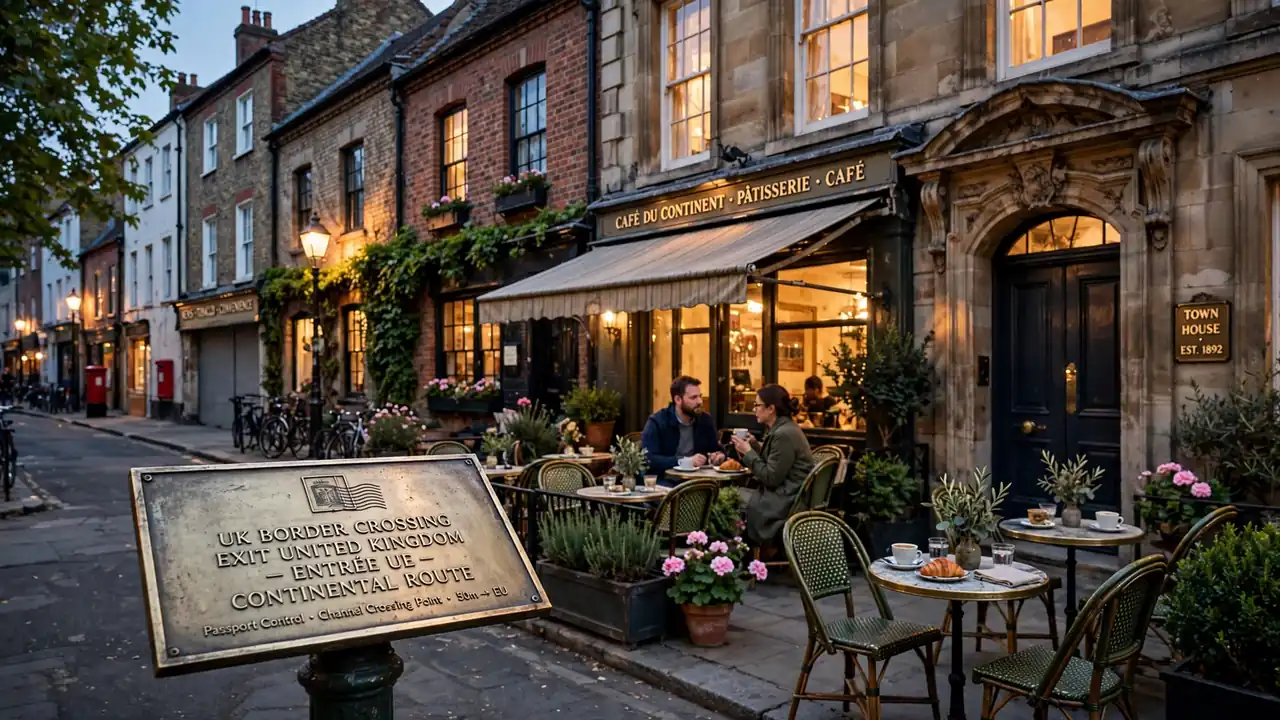
GamStop participation and UK licensing are separate questions, and an overseas address does not remove the licensing requirement for British customers.
GamStop and the Boundary of the UK Market
GamStop is Great Britain’s national online self-exclusion scheme. Its purpose is to make an exclusion apply across participating licensed gambling websites and apps, rather than leaving it to a person to approach each operator separately. For someone considering non-GamStop European casinos in 2026, that boundary matters: a casino’s location, branding or use of the word “European” does not determine whether it may lawfully offer real-money gambling to people in Great Britain.
The legal test is the market being served. Remote gambling operators selling into Great Britain must hold the relevant licence from the UK Gambling Commission, wherever the business itself is based. A European casino operating from outside the country is not thereby exempt from that requirement. If it offers gambling to British customers, its overseas address does not replace the need for a UK licence. Online gambling is legal in Great Britain only through operators holding the appropriate UKGC licence.
That distinction can be obscured by the language of travel. “European” sounds like a broad cultural or geographical category, while gambling regulation draws a narrower line around the customer and the service. A company may be based elsewhere in Europe, but if it serves the British market, the UK rules still matter. Conversely, a site that is not part of GamStop should not be treated as an alternative route within the regulated British system merely because it is described as European.
Non-UK-Registered Casinos: Licensing and Oversight
GamStop operates within that system as a multi-operator safeguard. A registered person is blocked from accessing current gambling accounts or opening new ones with UK-licensed online operators for the chosen exclusion period. The available fixed periods include six months, one year or five years. Registration is free. The scheme is not a general internet filter and does not claim to govern every gambling website in the world; its reach is tied to the UK-licensed online market.
The regulatory boundary became firmer on 31 March 2020, when the Gambling Commission made participation in GamStop compulsory for online operators. That date matters because it turned participation from a voluntary operator choice into a condition of the regulated online landscape. A British-licensed casino cannot present itself as outside the scheme while continuing to serve the same market under that licence. The scheme’s force comes not from a shared European identity, but from the UK’s licensing rules.
This is why lists promising the “best European online casinos” can be a poor guide to the most important question. A ranking may describe games, payments or presentation; it cannot make an unlicensed site lawful in Great Britain, nor can a foreign licence stand in for a UKGC licence. The adjective “European” is not a regulatory credential. Nor does a site’s apparent accessibility settle whether it is authorised to serve British customers.
Non-GamStop Curaçao Casino Sites: How to Assess
There is also a personal boundary within the legal one. A person who has registered with GamStop has made a formal commitment to stay away from gambling during the exclusion. Turning to a non-GamStop site to continue gambling could breach the terms of that self-exclusion, even if the site is based abroad or does not participate in the scheme. Opening another account elsewhere to get around an exclusion is not a safe workaround; it defeats the purpose of the commitment and may leave the player without the protections attached to the UK-licensed system.
The distinction is not merely administrative. Licensing gives the regulator authority over operators serving the British market and sets the framework in which safeguards such as self-exclusion apply. An overseas casino without a UK licence sits outside that regulatory relationship. Its own description of its jurisdiction cannot bring it within GamStop or give the UK regulator control over its conduct. Distance changes the oversight. It does not erase the British rules governing who may lawfully offer gambling here.
The boundary therefore has two sides: GamStop blocks access across UK-licensed online gambling platforms, while UK licensing determines which operators may lawfully serve Great Britain. These are related protections, but not identical ones. A search for a European online casino does not establish that a site is licensed in the UK, and the absence of GamStop participation should not be mistaken for permission to continue gambling during an exclusion.
Where gambling has already led to a financial loss, the regulator cannot provide a refund for money spent gambling. Self-exclusion is a preventive safeguard, not a mechanism for reversing losses. That is a sober distinction, but an important one.
Self-Exclusion Breach
Turning to a non-GamStop site to continue gambling could breach the terms of a self-exclusion agreement and defeat the purpose of the commitment.
Best casino sites in the UK
- BritsinoBonus: Welcome Package – Get your £2,200 + 2,000 FS · Payout speed: 1-3 business days
- BeOnBetBonus: 100% up to €500 + 100 FS · Payout speed: 1-3 business days
- Revery PlayBonus: 100% up to€1,000+ 100 FS · Payout speed: 1-3 business days
- EvoSpinBonus: 125% up to €2500 + 125 Free Spins · Payout speed: 1-3 business days
- WinBeastBonus: €5000 + 500 FS + €650 Freebet · Payout speed: 1-3 business days
- SpinFormulaBonus: 550% Up To £15,000 + 550 FS · Payout speed: 1-3 business days
- JetsetspinsBonus: 200% Bonus + 100 Free Spins + Free Royal Wheel · Payout speed: 1-3 business days
- NightWinBonus: £900 + 400 free spins · Payout speed: 1-3 business days
- NightLuckBonus: Welcome Pack + 805% Up To 6400€ + 280 FS · Payout speed: 1-3 business days
European Roulette Outside the Scheme
European roulette has an orderly surface: a wheel, a ball and a set of rules that appear to travel easily between countries. Online, that apparent simplicity can hide a more consequential distinction. The game is one thing; the business offering access to it is another. For someone who has self-excluded through GamStop, the question is not merely where a roulette table can be found, but whether a site sits inside the system designed to prevent access.
GamStop is a multi-operator scheme. It blocks registered people from participating licensed gambling websites and apps, rather than acting as a filter for one particular game. Roulette does not receive a special exemption from that arrangement. Nor does the European label tell anyone whether a site participates: it describes a style of roulette, or may suggest a business’s location or identity, but it does not establish how that business is regulated or whom it may lawfully serve.
That distinction matters because British rules attach to the market being served, not simply to the place where a company is based. Remote operators offering gambling to people in Great Britain must hold the relevant Gambling Commission licence. A foreign address does not, by itself, remove that obligation. An offshore casino operating outside the UK regulatory system is not a UK-licensed alternative for British customers, even if its pages describe its games as European or its roulette as familiar.
The phrase “non-GamStop casino” can therefore sound more reassuringly technical than it is. It may mean that a business is not connected to the scheme; it does not mean that the business has been approved as a safe route around it. A site outside the scheme cannot be treated as an extension of the regulated British market, and its apparent availability is not evidence that it is authorised to offer gambling here. Labels are cheap. Responsibility is not.
British casinos not on GamStop: rules and risks
There is also a direct personal consequence. People who have excluded themselves from gambling businesses or websites are refused service by the places they excluded themselves from. GamStop extends that barrier across participating licensed online sites and apps. A website outside the scheme may not be subject to that particular network block, but the technical possibility of reaching a page does not turn play into a neutral act. Gambling at a non-GamStop casino could breach the terms of a self-exclusion agreement. The gap in a blocking system is not permission.
This is especially easy to lose sight of when the game looks standard. A roulette wheel can seem detached from the institutions around it; the same colours and numbers appear in many settings. Online, however, the operator controls the account, access and service. The scheme concerns access to gambling businesses, not the design of a wheel. Changing from one roulette format to another, or choosing a European-themed site, does not alter the purpose of an exclusion.
The language of an “European online casino” can also blur geography with legality. Europe is not a single gambling licence, and a site’s use of European imagery or terminology does not show that it holds a UK licence. For British consumers, the relevant distinction is whether the operator is licensed to serve the British market. Where it is not, the site is outside the UK regulatory system, not a special European branch of it.
That leaves a less glamorous answer than a directory of tables or brands. No particular European roulette product or operator can be assumed to be available, suitable or authorised for British customers merely from a description. A list of names would not resolve the central issue: whether accessing the service conflicts with an existing exclusion and whether the operator may lawfully serve the market. In this setting, “best” is not a meaningful shortcut. A game’s presentation cannot answer either question.
Self-exclusion is meant to make access harder at moments when a person has chosen not to gamble. A search for another route may test the edges of that boundary, but the existence of a site beyond a scheme’s technical reach does not erase the boundary itself. The distinction between “not blocked” and “appropriate to use” is plain, if not always convenient. Dryly put: a loophole is not a safeguard.
Casinos That Bypass GamStop: UK Scope and Risks
European roulette remains a game category; “outside GamStop” describes a relationship to a self-exclusion system. Neither phrase confirms legal standing or establishes that a British player should use the site. For someone under exclusion, the important consequence is not whether a table can be opened. It is that access beyond the scheme may still carry the risk of breaching the agreement, while an offshore operator is not thereby made part of the regulated UK market.
A Roulette Search Does Not Cancel an Exclusion
A search for a European roulette table can feel separate from the decision to gamble. The game has its own vocabulary: the single zero, the layout, the distinction between inside and outside bets. But none of that changes the meaning of a self-exclusion agreement. It is a formal commitment not to gamble, and the person who made it remains responsible for keeping to it.
That responsibility does not disappear because a result describes a casino with European roulette rather than a betting site, or because the wording promises a premium or VIP experience. A game title and a table format are not exceptions to an exclusion. Nor does a fresh account, a different screen name or a change of device turn gambling into something outside the agreement.
Non-Gamban Casinos in the UK: What the Label Means
There is a reason the boundary can feel less visible online than it does at a physical venue. A building has a door, staff and a place where a decision becomes public. A browser offers a succession of pages, each of which can make the next step seem like a small, private choice. The formality of self-exclusion can look remote beside that smoothness. It is not remote in effect: the agreement still governs the person’s decision to gamble.
The word “European” can also create a misleading sense of distance. It describes a roulette format, not a legal status or a personal exemption. A European roulette online game remains gambling. A website’s language about its tables does not decide whether playing there is consistent with a self-exclusion agreement.
This matters particularly when a person is drawn towards non GamStop casinos. Playing there could breach the terms of a self-exclusion, even if a site presents itself as outside the scheme. Opening another account elsewhere to get around an exclusion is not a safe answer. The search for a casino with European roulette does not suspend the agreement or transfer responsibility to a website’s wording.
A search for the best online European roulette casino may be a sign of a conflict rather than a neutral comparison of tables, making the exclusion more important to take seriously.
Self-exclusion is not simply a request that a particular game be hidden from view. It is an undertaking not to gamble during the exclusion. Roulette’s speed, ceremony and apparent simplicity do not soften that undertaking. The same principle applies whether the attraction is an online roulette table, a live presentation or a description of a high-end casino experience. A change in style does not make the underlying activity different.
There is a social history in the neatness of roulette’s language. A wheel turns chance into something that can be named, divided and watched: red or black, odd or even, a single number or a broad field. The categories can suggest order without changing the uncertainty at their centre. Online descriptions may add another layer of polish, but the presentation cannot rewrite a person’s agreement with themselves.
A search for the best online European roulette casino may therefore be a sign of a conflict rather than a neutral comparison of tables. That does not make the person’s interest shameful; it makes the exclusion more important to take seriously. Gambling businesses must offer self-exclusion by law, but the agreement also depends on the player not choosing to gamble through another route. A safeguard cannot make that choice on someone’s behalf.
If roulette remains a temptation across several sites or venues, excluding only one place may leave the same impulse intact elsewhere. Self-exclusion is most coherent when it covers the places where gambling is likely to be tempting, rather than only the site that first prompted concern. The point is not to find a more suitable table. It is to honour the boundary already set.
That boundary is not a promise of reimbursement. The regulator cannot refund money spent gambling, and self-exclusion should not be treated as a way to recover losses. Its purpose is to stop further gambling within the terms of the agreement, not to settle what has already happened.
A roulette search can lead to another page in seconds. An exclusion has a different weight: it records a decision made to prevent gambling, and remains meaningful when curiosity returns in the form of a polished table or a persuasive description. The rules of the game have not changed. The obligation has not either.
Deposits, Accounts and the Limits of a Workaround
A self-exclusion agreement changes the status of the account it covers. Once the agreement is in place, the gambling business is required to close that account, return any funds held in it and remove the customer’s details from marketing databases. These are safeguards attached to the exclusion, not a promise that every financial consequence of gambling can be undone.
That distinction matters when an account balance is confused with money already spent. A regulator cannot refund gambling losses. Returning funds still held in a closed account is a separate duty; it does not restore money that has been wagered. Nor does the obligation to remove marketing details turn an exclusion into a general financial remedy. It is a boundary around the customer’s relationship with that business.
The same boundary cannot be treated as an invitation to start again elsewhere. A search for a European casino not on GamStop may appear to point towards a fresh account, perhaps even one described as a new European online casino or a top European online casino. But a different name on a website does not cancel the agreement. Gambling businesses have to take reasonable measures to stop people who have excluded themselves from continuing to gamble with them; the player, meanwhile, remains responsible for keeping to the exclusion.
Do
- Honour the formal limit of the self-exclusion agreement
- Use GamStop for UK-licensed platforms
- Request separate exclusions from individual businesses
Don’t
- Open another account to get around an exclusion
- Treat a non-GamStop site as a safe workaround
- View bonuses as a release from self-exclusion
Playing at non-GamStop casinos could breach the terms of a self-exclusion agreement. That is not merely a technical concern about where a deposit is processed. The exclusion was made to prevent gambling, and opening another account to get around it defeats that purpose. It is not a safe workaround.
There is also a difference between the practical possibility of finding European casino sites not on GamStop and the legal position of a business serving people in Great Britain. Remote operators offering gambling to the British market must hold a UK Gambling Commission licence, wherever the operator is based. Offshore casinos outside that system are not UK-licensed. A label such as “European casino” says nothing by itself about whether the business is authorised to serve British customers.
The language of promotions can blur these distinctions. A European casino no deposit bonus, a no deposit European casino or European slots online may sound like a low-stakes detour from an excluded account. None changes the agreement or the duties that apply to the business covered by it. A bonus is still an inducement to gamble, not a release from self-exclusion. The distinction is plain. The temptation may not be.
Account closure, return of remaining funds and removal from marketing lists are obligations of the business where the exclusion applies. They should not be mistaken for permission to move the same activity to another site, or for a route to reclaim gambling losses. The exclusion is a formal limit, not a puzzle whose answer is another login.
Slots and Safer-Gambling Controls on Casino Sites
A casino site can make its games conspicuous and its safeguards comparatively quiet. The self-exclusion process is usually found under a page labelled “Responsible Gambling” or “Safer Gambling”. The instructions there set out how to exclude from that individual website or app. If they cannot be found, the operator’s customer service team is the route to ask about the process.
That is a site-level measure, not a promise that every other gambling door will close. In Great Britain, gambling businesses are required to offer self-exclusion, and an operator must take reasonable steps to prevent someone who has excluded from gambling with it. The obligation belongs to the business as well as the person who has made the agreement. A button that records a request is not, by itself, the whole safeguard.
For someone considering European casino sites or European slot sites, the distinction matters. “European” describes a broad geography, not a single set of rules or protections. A site’s games, presentation or bonus terms do not establish that it is subject to UK safeguards. UK-facing remote gambling operators must hold a Gambling Commission licence; sites outside that system do not provide the same UK regulatory framework. Nor should an exclusion be treated as permission to move to another account elsewhere. Gambling at a non-GamStop casino could breach the terms of an existing self-exclusion.
Slots also sit within specific British controls. Online slot autoplay is banned, and each spin must last at least 2.5 seconds. These rules shape how licensed products can operate, but they do not replace the more personal safeguard of exclusion. A player who has decided not to gamble needs the exclusion process, not a different presentation of the same activity.
Managing Self-Exclusion
Locate the section
Find the page labelled “Responsible Gambling” or “Safer Gambling” on the casino site.
Request exclusion
Follow the instructions on the page or contact the operator’s customer service team.
Confirm the details
Set the duration of the exclusion and keep the confirmation received once registration is complete.
The language of “best European casino sites” or “top European slot sites” suggests that ranking games and bonuses is the main task. For someone under an active exclusion, it is the wrong measure. A list of European casino bonuses cannot tell whether a particular site is covered by the exclusion already in place, and a polished safer-gambling page does not make a site part of a multi-operator scheme.
The useful distinction is narrower: one operator’s process applies to that operator, while broader protection depends on the scheme or arrangements used. Finding the site’s safer-gambling instructions is a practical step, but continuing to seek another venue can undermine the purpose of the agreement. A safeguard is only meaningful when it is not treated as an obstacle to route around.
What UK Players Should Know Before Looking Abroad
A search for European casinos serving British customers can blur two different questions: where a gambling business is based, and which rules apply when it takes bets from people in Great Britain. A UK-licensed online casino is covered by GamStop, the national scheme that lets a person exclude themselves from gambling across participating licensed websites and apps. The Gambling Commission made participation compulsory for online operators in 2020.
Self-exclusion is not limited to a single route. A person can register with GamStop to block access across UK-licensed online gambling platforms, or ask an individual gambling business to exclude them. Gambling businesses must offer self-exclusion by law. The choice between a scheme-wide exclusion and a request to one business concerns the scope of the boundary, not a way to keep gambling elsewhere.
That distinction matters when attention turns to casinos described as European. A company’s location does not by itself determine whether it may legally serve people in Great Britain: remote operators offering gambling to British customers must hold the relevant UK Gambling Commission licence. A site outside that system is not another UK-regulated option simply because it is based in Europe or offers familiar games. Nor does a search for European slots change the reach of an existing exclusion.
For anyone who has self-excluded, opening an account at another site to get around the boundary is not a safe alternative. Gambling at non GamStop casinos could breach the terms of the self-exclusion agreement. The agreement is a formal commitment not to gamble, and the responsibility to keep to it remains with the person who made it. The geography of a company cannot make that commitment disappear.
A person who is tempted in more than one place needs a boundary broad enough to cover those places. That may mean using GamStop for UK-licensed online gambling and separately requesting exclusion from any individual business not covered by that registration. The same principle applies to venues or other settings where gambling may be tempting: an exclusion from one operator does not automatically amount to an exclusion everywhere.
The UK system treats self-exclusion as a practical safeguard rather than a promise that losses can later be undone. The Gambling Commission cannot refund money spent gambling. Its role is regulation; an exclusion is a step to prevent further access, not a route to recover past spending. A European casino may appear to answer a question about choice. For someone already excluded, the more important question is whether pursuing that choice would undermine the boundary already set.
Regulatory Boundaries
- UK-licensed operators must participate in GamStop
- A foreign address does not exempt an operator from UKGC licensing if serving the British market
- Self-exclusion is a personal commitment that remains binding regardless of the site’s location
- The Gambling Commission cannot provide refunds for money spent gambling
No-Deposit Offers Do Not Change Self-Exclusion
A no-deposit offer can make gambling sound detached from money: a bonus appears to arrive without the ordinary first step of funding an account. The wording changes the entrance, not the nature of the activity. A free bonus still invites play, and it does not suspend a self-exclusion agreement.
That matters when European casinos with no-deposit bonuses appear to offer an alternative during an exclusion. “European” describes a broad geography, not an exception to the rules governing access from Britain. Remote gambling operators serving customers in Great Britain must hold a UK Gambling Commission licence. A site outside that system is not made lawful for the British market by describing an offer as European, free or deposit-free.
Self-exclusion is a formal agreement not to gamble for a set period. The player remains responsible for observing it; a promotion cannot cancel or revise the agreement. Gambling businesses must offer self-exclusion by law and, once an agreement is made, must close the customer’s account, return its funds and remove the customer’s details from marketing databases. An advert or bonus message is no permission to resume play.
Nor does looking for a European online casino no-deposit bonus create a harmless loophole. Playing at non GamStop casinos could breach the terms of a self-exclusion, and opening an account elsewhere to get around it is not a safe response. The distinction between a welcome offer and a deposit-free offer is commercially useful to the advertiser. It is irrelevant to the person who has agreed not to gamble.
The phrase “best European casino no-deposit bonus” also carries a quiet assumption: that the only question is which offer gives most. In the context of an active exclusion, ranking promotions misses the central issue. The offer may be framed as a gift, but its purpose is to bring someone into gambling. A free entry is still an entry.
Self-exclusion is not a discount code that can be set aside when the wording of a promotion is attractive. The formal agreement remains in force, and the business’s duties remain attached to it. Where gambling has been excluded, the safer course is not to seek another offer or another account, but to avoid gambling sites and other places where the temptation may arise. The bonus changes nothing.
Casino Choices Without an Unsupported Best-of List
A ranking makes a complicated decision look settled. “Best” may mean a broad games catalogue, a particular roulette table, or a site’s approach to safer gambling; without a stated basis, the same label can conceal several different judgements. A European casino list is not, by itself, evidence that its entries are comparable or suitable for a particular person.
The distinction matters especially when a list is framed around non-GamStop casinos. A polished comparison cannot turn a site outside the UK’s regulatory system into a UK-licensed casino, nor can a recommendation establish that an operator is appropriate for someone who has excluded themselves. A familiar design and confident language are not safeguards.
Casino games invite ranking because their differences can be made to look measurable. Yet a list of slots or roulette sites is only useful when its claims can be checked and its criteria explained. Without that, rankings risk replacing judgement with presentation. There is no magic in a numbered column.
For a person under self-exclusion, the central issue is not whether one casino appears better than another. Gambling businesses must take reasonable steps to prevent a self-excluded customer from gambling, and playing at a non-GamStop casino could breach the terms of that exclusion. Opening an account elsewhere to get around it is not a safe alternative. A ranking cannot make that conflict disappear.
The responsible way to assess any commercial comparison is to ask what it actually establishes: whether the criteria are clear, whether the claims are current, and whether the writer has a basis for comparing the named services. If those elements are absent, the word “best” is a verdict without a visible case behind it. That is a weak foundation for a decision involving money, and a particularly poor one where self-exclusion is in force.
Crypto, Roulette and the Reach of Online Self-Exclusion
A payment method does not define the reach of self-exclusion. Whether a site promotes roulette, accepts cryptocurrency or presents itself as a European casino, those features do not cancel an existing agreement to stop gambling. Nor do they establish that a particular site is covered by a particular scheme.
For online gambling, self-exclusion can be arranged through GamStop or directly with an individual casino. GAMSTOP is a multi-operator scheme: it blocks access to participating licensed gambling websites and apps. An exclusion arranged with one business, by contrast, concerns that business. The distinction is practical, not decorative.
UK gambling businesses must offer self-exclusion. But a search for a crypto casino does not establish that it falls within GAMSTOP’s participating network, and a payment option cannot be treated as evidence of protection. A site beyond the scheme is not thereby a safe alternative. Playing at non GamStop casinos while an exclusion is active could breach the terms of that self-exclusion. Opening another account elsewhere to get around it is not a responsible course.
The wider point is that digital borders make exclusion less visible, not less important. A roulette table may be rendered as software; a deposit may move through a digital wallet; the person who asked to stop remains the same. Self-exclusion is a formal agreement, and the player remains responsible for keeping to it. The regulator cannot refund money spent gambling.
That leaves no sound basis for ranking European roulette or crypto casinos as destinations for someone who has excluded themselves. The relevant question is not which payment rail or game appears on a site, but whether gambling itself is compatible with the exclusion already made. When the answer is no, changing the currency does not change the answer.
When Gambling Stops Being a Game
Self-exclusion is a practical decision, but it begins with a clear account of where gambling happens. Online sites and physical venues should be identified before registration: an exclusion from one business does not automatically cover every place where someone might be tempted to gamble. For online play, registration can be made through GamStop or with an individual gambling business. At a land-based casino, the request can be made at the customer service desk.
The process asks for personal information so the person’s identity can be confirmed. That is not administrative decoration. A restriction that cannot be matched to the right account or person is harder to apply. The person also sets the duration of the exclusion and should keep the confirmation received once registration is complete.
Casino No ID Verification in the UK: What It Means
A search for European casino games, or for a European roulette game, does not change those steps. Nor does finding a site outside the scheme establish that gambling there is compatible with an existing exclusion. Playing at non GamStop casinos could breach the terms of a self-exclusion. The boundary is the agreement, not the name of the game.
Gambling businesses are required by law to offer self-exclusion, and must take reasonable steps to prevent an excluded customer from gambling. That safeguard works best when the request covers the places that matter to the person, rather than only the most visible account or venue. Confirmation is worth keeping; the chosen duration is worth treating as binding.
Self-exclusion is not a promise to feel differently overnight. It is a formal barrier, created through identification, registration and a defined period away from gambling. Small steps. A firm line.
How does self-exclusion work?
You identify the gambling sites or venues to exclude yourself from, provide information to confirm your identity and choose an exclusion period. The businesses covered must refuse service; for online gambling, you can use GamStop to exclude yourself from UK-licensed operators or contact an individual operator.
How do I return from self-exclusion?
To end a GamStop exclusion, contact GamStop directly and request removal. A 24-hour cooling-off period applies, during which you can cancel the request; after removal, it may take operators a further 24 to 48 hours to update your status.
How does GamStop benefit me?
GamStop blocks you from accessing existing accounts or opening new ones with participating UK-licensed online gambling operators, helping you stick to a decision to stop gambling. Registration is free.
How long does it take for GamStop to become active after sign-up?
The 24-hour cooling-off period begins after your identity has been verified, and your exclusion remains active during that period.
What are casinos outside GamStop, and are they legal for players in the UK to use?
They are online casinos that do not participate in GamStop, often because they operate outside the UK-licensed system. A casino based in Europe still needs the relevant UK Gambling Commission licence to lawfully offer gambling to people in Great Britain; an overseas licence does not replace it.
How does a non-GamStop casino handle self-exclusion?
You can request exclusion from an individual gambling business through its Responsible Gambling or Safer Gambling page, or by contacting customer services. Once an exclusion agreement is made, the business must close your account, return any account funds and remove your details from its marketing databases.
Can I play roulette at non-GamStop casinos from the UK?
Roulette is not exempt from UK gambling rules: a casino offering it to people in Great Britain must hold the relevant UK Gambling Commission licence. If you have self-excluded through GamStop, using a non-GamStop site to keep gambling would undermine that commitment.
Material created by the team Pure Casino UK Guide


