

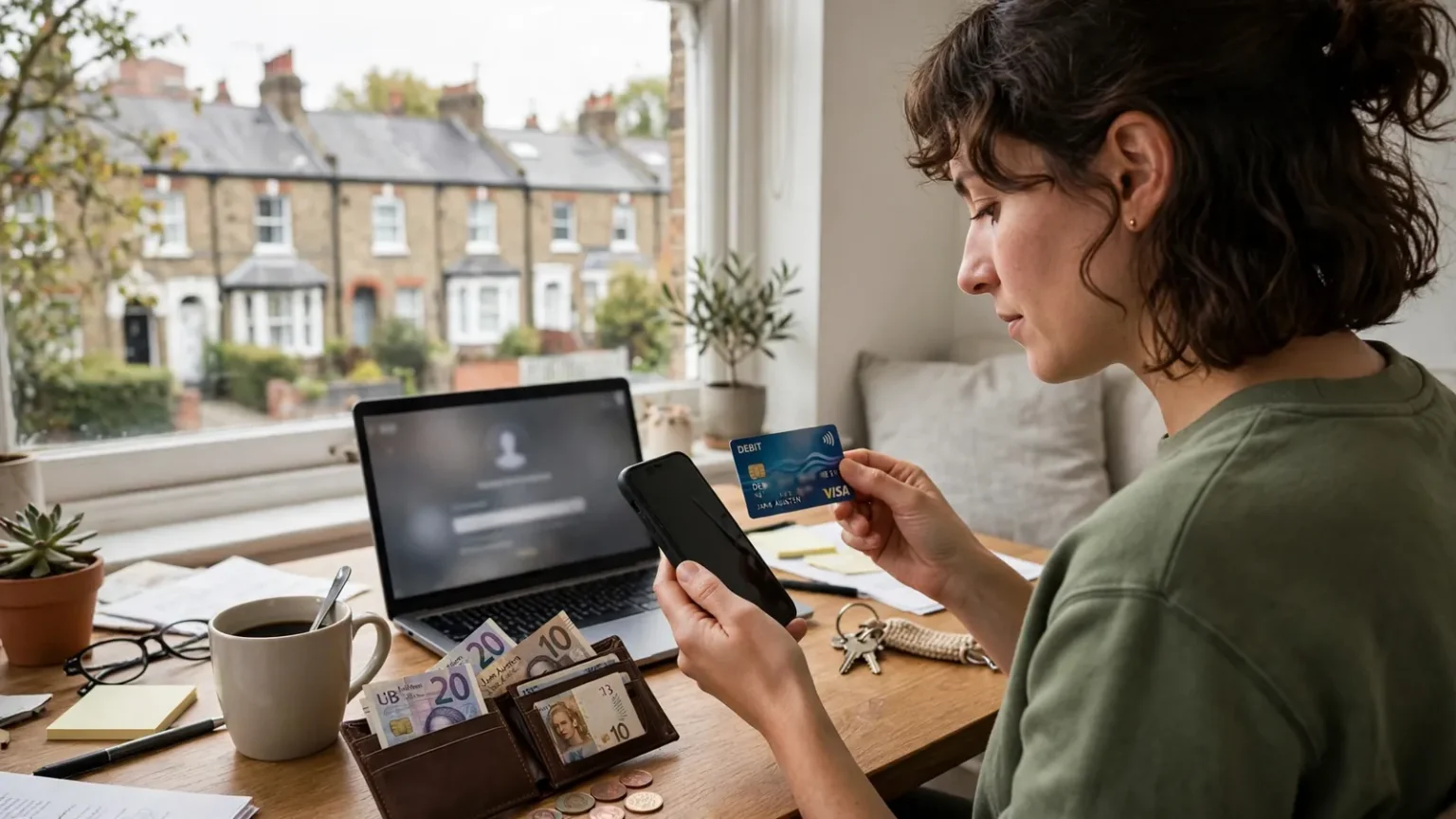
Payment routes can differ between deposits and withdrawals, while account checks determine whether a balance is available to cash out.
How Casino Deposits and Withdrawals Fit Together
A casino payment begins outside the game. A player selects a deposit method shown in the account, enters the requested details and confirms the transaction through the relevant service. If it is accepted, the casino credits the account balance. The precise steps depend on the route and the operator; a debit card, for instance, may be offered, but its presence should be checked on that casino’s cashier page.
That is the deposit side of the journey. A withdrawal starts inside the casino account: a player requests payment of an available balance, and the operator processes the request through the options it permits. The money does not move simply because a game displays a win. It must first be part of the balance that can be withdrawn, and the request has to pass the operator’s account and payment checks. Processing by a payment service and approval by the casino are separate parts of the journey.
The distinction matters. A payment service can handle a transaction, but it does not decide whether a casino balance is withdrawable. That question belongs to the casino account: funds may be real-money balance, bonus funds or winnings subject to conditions. A bonus can therefore affect what may be withdrawn even when the deposit itself has gone through without difficulty. Its terms, not the card or account used to pay, determine how the offer works.
In Britain, age must be verified before an operator allows a customer to deposit into a gambling account. Online gambling is legal for adults at operators holding a UK Gambling Commission licence. The cashier is thus more than a menu of transaction routes; it sits inside an account governed by the operator’s rules and its regulatory obligations.
A useful way to read “online casino deposit and withdrawal methods” is as two linked but not identical lists. A route available for deposits may not be available for withdrawals, and the operator’s own terms settle that question. Payment processing describes the movement of money. Account status and offer conditions describe whether that money, or any winnings attached to it, can leave.
Online Casinos with High Cashback Bonuses in the UK
The distinction is plain, if not always obvious.
The Payment Routes UK Casinos Offer
The familiar payment menu at a casino is less a catalogue of brands than a map of different ways money can move. A debit card draws on a bank account; a bank transfer moves funds through banking services; an electronic wallet holds or routes money separately; a prepaid service begins with value purchased in advance. Mobile-network billing and device wallets add other paths. The labels may sit side by side on a cashier page, but they do not describe the same relationship between player, bank, payment provider and casino.
Debit cards are a direct route for many people because they connect a deposit to an existing current account. The important distinction in Britain is between debit and credit: UK-licensed casinos cannot accept credit-card payments for gambling. That prohibition also reaches credit-card funds routed through a money service business. A wallet cannot be used as a back door where it allows credit-card money to fund gambling. Payment labels alone do not settle the question; the source of the funds matters.
Bank transfers take a different route, through a bank account rather than a card network. Some services connect a casino payment to online banking, while others may involve a more conventional transfer process. These are bank-linked options, but that does not make them identical: the steps presented, the information requested and the operator’s accepted routes can vary. A payment path that feels direct at one cashier may not appear at another.
Electronic wallets are accounts used to store or move funds between a bank or card and a merchant. They can separate the casino transaction from the underlying account, but they remain subject to restrictions on funding sources. A wallet’s presence in a payment menu is not permission to gamble with credit. Nor does the word “wallet” tell much about how a later withdrawal will be handled; the casino’s rules and the account details still govern that part.
Credit Card Ban
UK-licensed casinos are prohibited from accepting credit-card payments for gambling, including funds routed through money service businesses or wallets.
Prepaid services work from value acquired before the casino deposit, rather than drawing on a bank balance at the moment of payment. That can make them distinct from card and bank-account routes, though their usefulness depends on whether the operator accepts that particular service and what the cashier permits. Prepaid does not mean anonymous in every respect, or exempt from the casino’s account checks. Payment is only one part of an account relationship.
Carrier billing is another category: a charge is placed through a mobile-network account rather than a bank card or wallet. It is easy to confuse this with paying on a phone, although the two ideas are separate. A casino can be visited on a handset while the deposit uses a debit card; a network-billed transaction is defined by where the charge goes, not by the screen on which it was made. This distinction matters when comparing menus that group options by brand or device.
Device wallets sit between the phone and the underlying funding source. They can present a stored card or account for a transaction, but they do not erase the rules attached to that source. In particular, credit-card funding cannot become acceptable for gambling simply because it is presented through a wallet. The name on the button is only the visible layer.
Newest Online Casinos with No-Deposit Bonuses
These categories also differ in how much information a transaction may expose to the casino, what account or app must be set up beforehand, and which route is available for a given customer. Those details cannot be inferred from the category alone. Even two casinos listing the same kind of service may handle it differently, and a method available for depositing is not automatically available for withdrawals.
For UK players, the wider framework matters alongside the cashier menu. Remote operators offering real-money gambling to customers in Great Britain must hold the relevant UK Gambling Commission licence. That regulated setting shapes what a casino may accept, including the ban on credit-card gambling, but it does not make every deposit route universal. A payment option can still depend on the operator, its payment arrangements and the customer’s account.
There is no single best route for every account. One person may value a familiar bank connection; another may prefer a prepaid balance or an account-based service. The practical comparison is less about a technology winning outright than about fit: accepted funding source, available deposit and withdrawal functions, required account, and the operator’s stated conditions. A payment menu is a small piece of infrastructure, not a promise that every button works for every player.
That is the useful distinction among casino payment methods: each is a route with its own dependencies, not merely another logo in a row. Cards, bank transfers, wallets, prepaid services, carrier billing and device wallets can all look like alternatives at the point of deposit, yet their funding rules and roles differ. The labels are tidy. The plumbing is not.
Payment Route Summary
- Debit cards provide a direct route to current accounts
- Bank transfers move funds through banking services
- Electronic wallets separate transactions from underlying accounts
- Prepaid services use value acquired in advance
- Carrier billing charges deposits to mobile-network accounts
- Device wallets present stored cards or accounts for transactions
Best casino sites in the UK
- BritsinoBonus: Welcome Package – Get your £2,200 + 2,000 FS · Payout speed: 1-3 business days
- BeOnBetBonus: 100% up to €500 + 100 FS · Payout speed: 1-3 business days
- Revery PlayBonus: 100% up to€1,000+ 100 FS · Payout speed: 1-3 business days
- EvoSpinBonus: 125% up to €2500 + 125 Free Spins · Payout speed: 1-3 business days
- WinBeastBonus: €5000 + 500 FS + €650 Freebet · Payout speed: 1-3 business days
- SpinFormulaBonus: 550% Up To £15,000 + 550 FS · Payout speed: 1-3 business days
- JetsetspinsBonus: 200% Bonus + 100 Free Spins + Free Royal Wheel · Payout speed: 1-3 business days
- NightWinBonus: £900 + 400 free spins · Payout speed: 1-3 business days
- NightLuckBonus: Welcome Pack + 805% Up To 6400€ + 280 FS · Payout speed: 1-3 business days
Payment Options, Eligibility and Bonus Terms
A deposit method can do more than move money into a casino account: it may affect whether a welcome bonus is available. The offer and the payment route are separate parts of the arrangement, even when the deposit screen presents them together. A method appearing among the casino’s online payment options does not, by itself, establish that a deposit made with it will qualify for an offer.
A specialist review reports that welcome deals may be restricted to new customers, limited to one per household, or unavailable when certain methods, including some e-wallets, are used. Those are conditions to check against the casino’s own current offer terms, not rules that apply to every operator. The wording matters: “accepted for deposits” and “eligible for the welcome bonus” are not necessarily the same thing.
The best payment option for online casinos therefore depends partly on the purpose of the deposit. Someone considering an offer needs to check whether the selected method qualifies, whether a minimum qualifying deposit applies, and whether the bonus must be claimed during registration or at the payment stage. A bonus may also have separate conditions governing eligible games, expiry and withdrawal. The headline amount is only one part of its value.
In Great Britain, wagering requirements attached to bonus funds cannot exceed ten times the bonus amount. A £20 bonus at that ceiling would require £200 in total stakes before the related funds could be withdrawn. The calculation is simple; the games on which those stakes count may not be. Offer terms can assign different contributions to different games, so the required total of actual play may depend on what is played.
This also explains why a seemingly convenient casino payment option is not automatically the right choice for a promotion. A deposit made through a familiar account or wallet may be accepted but excluded from a particular welcome deal; another route may qualify only when a stated condition is met. Neteller, like any other named service, should be assessed by the operator’s published terms rather than by its general presence in a payment menu.
Cascading Slot Games in the UK: How They Work
The small print is not an afterthought. It is the offer.
Paying from a Phone: Convenience and Limits
A casino opened on a phone is still a casino account, not a separate kind of gambling. The small screen changes how a deposit is made: payment details may be entered through a compact form, an existing account may be selected, or a device wallet may ask for authentication. The route remains governed by the casino’s own accepted deposit methods and account checks. A phone makes the interface portable; it does not make every route available.
That distinction matters because “paying by mobile” can mean two different things. It can describe using a phone to access a card, bank account or digital wallet. Or it can mean charging a deposit to a mobile-network account, with the amount appearing on a phone bill or being taken from prepaid credit. The first is payment on a device. The second is payment through a carrier service. They may look similar at the point of choice, but they rely on different arrangements and can have different terms.
The screen itself adds a practical layer. A payment page designed for a desktop may require scrolling between fields, correcting an address, or returning to the cashier after authentication. On a phone, the operating system may remember details or offer a saved credential, but that convenience depends on the device, browser, wallet and operator. A saved card is not proof that the casino accepts it; an available wallet button is not proof that the funding source behind it is permitted for gambling.
British rules place firm boundaries around those funding sources. UK-licensed casinos cannot accept credit-card payments for gambling, including credit-card funding routed through a money service business. They also cannot accept wallet payments where the wallet allows credit-card funds to be used for gambling. A phone’s ability to store or present a card does not change that restriction. The useful question is not whether a payment icon appears, but whether the underlying route complies with the casino’s terms.
Online Casino with a 200% Bonus: How It Works
There is another difference between a mobile-network charge and a conventional deposit. Carrier billing can make the phone account part of the transaction, rather than simply serving as the screen from which a bank or wallet is opened. Its availability therefore depends on the operator’s payment arrangements and the mobile service involved. A casino with a mobile payment option may mean a casino that works well on a phone; it does not necessarily mean that deposits can be added to a phone bill. The phrase is broader than the service.
Mobile use can also blur the boundary between browsing and spending. Casino operators must verify a customer’s age before allowing a deposit, and remote operators must prompt new customers to set a financial limit before their first deposit. Accessible account-level limit controls must also be provided. These requirements apply whether the account is opened on a computer or a handset. A compact interface should not make those controls harder to find or turn the deposit into an invisible tap.
The same principle applies to games. Mobile slots are not a separate category exempt from British rules: autoplay is banned, and each online slot spin must last at least two and a half seconds. The permitted stake in a game cycle is capped at £2 for players aged eighteen to twenty-four and £5 for those aged twenty-five and over. The rules follow the game and the account, not the size of the screen.
For a player comparing a phone-based deposit route, the important details are therefore functional rather than promotional: whether the casino accepts the route, whether the account or network provider supports it, what information is shown before confirmation, and how the casino records the transaction. A failed or pending payment can be difficult to interpret when the casino cashier and a third-party payment service display different messages. Keeping the confirmation and checking the account history can help distinguish a completed deposit from an abandoned or declined attempt.
Do
- Verify the operator holds a UK Gambling Commission licence
- Set a financial limit before the first deposit
- Check if the payment method is eligible for the welcome bonus
Don’t
- Use credit cards to fund gambling deposits
- Assume a wallet button proves the funding source is permitted
- Rely on outdated reviews for current payment terms
A British-facing casino must hold the relevant Gambling Commission licence to offer remote gambling to customers in Great Britain. That obligation does not change because the service is accessed through an app or mobile browser. Nor does an attractive mobile checkout establish that the operator is licensed. The phone is merely the window; the regulatory status belongs to the operator.
The promise of mobile payment is often presented as friction disappearing. In practice, friction is sometimes the only visible sign that several institutions are involved: the casino, the bank or wallet, and, for carrier billing, the mobile network. A smooth interface can simplify a transaction, but it cannot settle questions about eligibility, funding source, limits or account status. Convenience has boundaries.
Digital Wallets and Alternative Payment Accounts
Digital wallets and alternative payment accounts sit between a bank account and a casino cashier, but the label covers services that do not work in the same way. Some are accounts with a balance; others provide a route for authorising a transaction or use prepaid value. Names such as ecoPayz and AstroPay may appear beside casino deposit options, yet their presence on a general list says little about whether a particular operator accepts them.
That distinction matters. A payment service can be available in the country but absent from a casino’s cashier, or appear there with conditions attached. An account may also need to be opened and funded separately before it can be used. The casino’s terms, the service’s own rules and the details of the account all shape whether a deposit can proceed. A logo is an invitation to check, not a promise.
Online Casino with 300% Bonus: Terms Explained
The same caution applies to prepaid services and other alternatives. They can offer a different way to organise spending, but they are not interchangeable with a wallet that holds an account balance. Some are designed around a voucher or prepaid code; others connect an existing account to a merchant transaction. The cashier should make clear which kind of route is being offered and whether it supports deposits, withdrawals, or only one of those actions. The name alone cannot settle the question.
There is also a specific restriction for wallet funding: a UK-licensed casino cannot accept a wallet payment if that wallet allows credit-card funds to be used for gambling. A wallet may therefore be unsuitable even when it is technically listed as an option. Its funding rules matter as much as the casino’s.
This is why searches for ecoPayz casinos or AstroPay casinos produce only a starting point. The relevant check is the operator’s own cashier and terms, where availability can be assessed for the account in question. Eligibility may depend on account details or on the route used to fund the service; no alternative account should be treated as universally accepted across UK casinos.
The appeal of this cluster is variety, not uniformity. It gathers services that can make a payment outside the familiar card-and-bank pattern, but each brings its own account structure and conditions. A service name can look reassuringly portable. The rules are not.
PayPal, Paysafecard and Casino Deposits
PayPal and Paysafecard represent different ideas of what a deposit should be. PayPal is an account-based service: a casino transaction is linked to a PayPal account rather than entered as a direct card payment at the casino. Paysafecard is prepaid, so spending is drawn from value obtained in advance. The distinction matters more than the shared label of “alternative payment”. One route centres on an account; the other on prepaid funds.
Online casino with a 400% bonus: how it works
Neither name guarantees a deposit option at a particular casino. A site may offer one, both or neither, and its cashier is the practical record of what it accepts. Even where PayPal appears among the listed methods, the permitted funding source matters. UK-licensed casinos cannot accept credit cards for gambling, and operators cannot accept wallet payments where credit-card funds can be used for gambling. A wallet’s presence at checkout does not make every way of funding that wallet acceptable.
Paysafecard changes the shape of the transaction. Its prepaid character can help keep a deposit separate from the balance of a bank account, but it does not remove the casino’s own rules about accounts, withdrawals or offers. Nor does the word “prepaid” tell a player whether a particular casino supports the service. The option has to be listed by the operator, and the terms attached to it still matter.
The two methods also call for different checks before a deposit. For PayPal, the key question is whether the casino accepts it and whether the account’s funding source is permitted for gambling. For Paysafecard, the question is whether the casino accepts prepaid deposits and what its instructions require at checkout. In either case, the displayed cashier terms take precedence over assumptions formed from the payment brand’s wider reputation.
Welcome bonus conditions are a separate matter. An accepted deposit route does not, by itself, establish eligibility for an offer: some offers may exclude particular methods, including e-wallets. The offer terms should therefore be read alongside the payment instructions, not inferred from the fact that a deposit can be made. A bonus can make an ordinary transaction less ordinary.
Casino Bonuses & Promotions in the UK
For a casino serving Great Britain, real-money gambling belongs within the UK Gambling Commission’s licensing system. Payment choice does not alter that regulatory position. PayPal and Paysafecard are simply two possible ways a casino may let an account be funded; neither is a seal of approval, nor a promise that every deposit or offer will be treated alike. The small print remains the less glamorous part of the cashier.
Boku and Revolut: Two Different Payment Paths
Boku and Revolut can appear in the same list of casino deposit methods, but they describe different routes. Boku is associated with carrier billing: a payment is linked to mobile-network billing rather than made through a conventional bank account. Revolut is an account-based service. Treating both simply as “mobile payments” blurs the distinction between paying through a phone connection and paying from an account accessed on a phone.
That distinction matters at the point of deposit. A casino may list Boku as an option, but that does not establish that every mobile network, account type or customer is eligible. The operator’s cashier and terms are the relevant place to confirm whether Boku is available, what conditions apply and how the transaction is handled. A casino with Boku payment support should say so directly; the name appearing in a general payment guide is not evidence of acceptance.
Carrier billing also has a different character from using an account-based service. The mobile operator sits within the payment path, so a charge associated with a casino deposit may be reflected through that service rather than as an ordinary bank-account transfer. This can make the distinction between a casino transaction and a phone account less obvious in household budgeting. The channel is not the same thing as a casino balance, and it does not alter the casino’s own account or withdrawal conditions.
Revolut belongs to another category. Its relevance is as an account-based way to pay, subject to the casino’s stated options and the terms attached to the account. A Revolut casino payment should not be assumed possible merely because a casino accepts cards or other account services; acceptance is operator-specific. The funding source matters too. UK-licensed casinos cannot accept credit-card payments for gambling, including credit-card funds routed through a money service business, and operators cannot accept wallet payments where credit-card funds can be used for gambling.
Online Casino with 500% Bonus: How It Works
The practical comparison, then, is not which name sounds more modern. Boku connects a deposit with mobile-network billing; Revolut connects it with an account-based payment route. Each can be absent from a casino’s cashier, and each can carry conditions that are easy to miss when attention is fixed on the deposit button. Check the exact option and its terms before relying on either. Different paths, same need for verification.
Apple Pay and Google Pay at Online Casinos
Apple Pay and Google Pay are device wallets, not separate casino accounts in the same sense as a specialist payment service. They let a customer authorise a payment through a phone or other compatible device, while the money comes from a funding source connected to the wallet. That distinction matters at a UK casino: seeing a wallet option at checkout does not, by itself, establish which source will fund the deposit or whether that source is permitted for gambling.
Acceptance is operator-specific. An Apple Pay casino UK listing or a Google Pay option on a casino’s deposit page should be checked against the casino’s own terms and the payment screen. Availability can depend on the operator, the customer’s account and the funding source. A method appearing in a wallet is not proof that the casino accepts it; nor does a familiar device interface settle the rules behind the transaction.
Credit cards are the important boundary. UK-licensed casinos cannot accept credit-card payments for gambling, including credit-card funding routed through a money service business. They also cannot accept wallet payments where the wallet allows credit-card funds to be used for gambling. A wallet may bring several funding sources together, but that convenience does not make every source suitable for a casino deposit. The relevant question is not simply whether Apple Pay or Google Pay is installed, but what is being used to fund the payment and whether that arrangement is allowed.
Attention: A device wallet interface does not override the ban on credit-card funding for gambling in the UK.
The casino’s terms should therefore be read alongside the wallet’s funding settings before a deposit is attempted. If the operator does not clearly identify accepted wallet payments or eligible funding sources, the uncertainty is a reason to pause rather than assume that a transaction will work. A payment that fails can be inconvenient; a payment route that breaches the operator’s rules can also affect account handling.
These checks apply to Apple Pay and Google Pay as device wallets, not to every service described as digital or electronic. ecoPayz and AstroPay, for instance, should not be treated as interchangeable names for a phone wallet: each service’s acceptance and conditions need to be confirmed with the casino separately. The interface may look simple. The permission structure is not.
Trustly and Bank-Linked Casino Payments
Trustly sits in a different part of the payment landscape from a debit card, a prepaid voucher or a device wallet. It is associated with bank-linked payments: the casino deposit is arranged through a connection to a bank account rather than by entering card details or redeeming a voucher. That distinction matters because a familiar name on a cashier’s page does not make every route interchangeable. Each has its own eligibility, handling and withdrawal conditions.
For a casino deposit, Trustly is an option only where the operator lists it and makes it available to that account. The name may appear in payment information without being offered to every customer or for every transaction. Availability can depend on the operator’s arrangements and the account’s circumstances; the presence of Trustly at one casino is no evidence that another accepts it.
Bank-linked does not mean that the casino account and bank account become one account. The casino still keeps its own balance and applies its own rules to deposits, withdrawals and identity checks. Nor does choosing Trustly decide whether a bonus applies. An offer’s terms govern eligibility and any restrictions on particular deposit methods; those conditions should be read separately from the payment route.
Online casino 600% bonus: how the offer works
The security question is best approached without treating a payment brand as a guarantee. A bank-linked route is not the same as handing card details to a casino, but the relevant safeguards also include the casino’s status and the way the transaction is authorised. In Great Britain, an operator taking gambling business from consumers must hold the relevant UK Gambling Commission licence. A payment option cannot substitute for that regulatory oversight.
This route may suit people who prefer a bank-linked transaction to a card-style payment, but it should not be assumed to offer a particular processing time, fee arrangement or withdrawal path. Those details belong to the operator’s current terms and the payment information shown in the account. A deposit option and a cash-out option are not necessarily identical.
Trustly casinos in the UK are therefore best understood as licensed operators that choose to make this bank-linked route available, not as a separate class with shared rules. Before making a deposit, the important distinction is between what Trustly enables and what the casino permits. The name is only one part of the arrangement.
Checking a Casino’s Payment Terms Before Depositing
A payment logo is an invitation to inspect the terms, not proof that a deposit route will work for every account. Casinos can vary the methods they make available, and a familiar name may appear at checkout without being usable for every transaction. The practical check is the operator’s own cashier and payment terms: do they list the intended deposit method, and do any conditions apply to its use?
That applies whether the route is a debit card, PayPal, Paysafecard, Skrill, Neteller, Revolut, Trustly, Apple Pay, Google Pay or Boku. These names describe different services, but the final decision belongs to the casino and its payment arrangements. Visa and Mastercard debit cards should not be confused with credit cards: UK-licensed casinos cannot accept credit-card payments for gambling. The ban also covers credit-card funds routed through a money service business, and wallets cannot be used for gambling if they allow credit-card funding. A wallet’s presence in a cashier is not permission to fund it by any route.
Read the account conditions as well as the cashier
Payment terms sit alongside account rules. Operators must verify a customer’s age before allowing a deposit, and new customers must be prompted to set a financial limit before their first deposit. Account-level limit controls must remain accessible. Those requirements are part of the environment in which deposits are made, not optional extras buried beneath a list of logos.
The terms should also explain what happens if a deposit or withdrawal needs review, and which account details must match. A payment can be accepted as a deposit route while still being subject to the operator’s checks. That is not the same as a promise that every transaction will proceed without questions.
Confirm the UK licence
For a casino serving Great Britain, the most consequential check is whether the operator holds the relevant UK Gambling Commission operating licence. The Gambling Act 2005 supplies the principal framework for England, Scotland and Wales; it does not govern Northern Ireland. Remote operators offering gambling to customers in Great Britain need the appropriate UK licence, wherever the business itself is based.
The licence number should be checked against the Commission’s public register before money is deposited. An offshore address does not replace a British licence where the operator is selling into the British market. Sites outside the UKGC system do not provide the same safeguards: they lack UKGC oversight, GAMSTOP coverage and access to the regulator’s dispute framework, and are not subject to UKGC requirements on stake limits or bonus rules. The distinction is regulatory, not cosmetic.
UKGC-licensed casinos must provide responsible-gambling tools, including self-exclusion. They must also have an internal complaints process and give access to an approved Alternative Dispute Resolution service. These routes matter when a payment dispute becomes an account dispute: a customer needs to know not only how money enters the account, but where a complaint can go.
Make the final check before confirming
Payment terms can change, so an old review or a remembered cashier is not a substitute for the operator’s current information. Check that the chosen route is listed, that its funding source is permitted, and that the account conditions are understood before confirming a deposit. Then verify the licence independently rather than relying on a badge displayed on the casino’s own pages.
The process is deliberately less glamorous than the payment logos. It is also the part that establishes whether the transaction sits inside the protections of the British system.
Do I need a promo code to activate the welcome bonus?
Sometimes. Some offers require a code during the deposit process, while others are applied automatically; check the offer’s terms before depositing.
Do I have to wager free-spin winnings before I can withdraw?
Usually, yes. Free-spin winnings often have wagering requirements, and some offers also cap the amount you can withdraw.
Why do UK gamers opt for non-UK gaming sites for better promotions?
Some offshore sites advertise larger multi-deposit packages, lower wagering requirements and higher bonus-play stake limits than UK-licensed casinos. They do not provide UKGC regulation, GAMSTOP coverage or UKGC dispute resolution.
Material created by the team Pure Casino UK Guide


