

Klarna availability depends on the operator’s cashier and the specific payment arrangement, while deposits and withdrawals may follow separate rules.
Klarna and the UK Casino Cashier: What the Payment Rules Allow
A payment name can travel further than the payment itself. Klarna may appear in a search about British casinos, in a general list of ways to pay, or beside a retailer’s checkout button. None of those appearances establishes that it can fund a gambling account at a UK-licensed casino. For that, the relevant evidence is the operator’s own cashier and the terms attached to the payment option there.
The distinction matters because payment brands do not all describe the same kind of transaction. A logo may identify a provider, a way of routing money, or a service that offers different ways to pay. A name on a page cannot show which arrangement would apply to a particular casino deposit, whether the operator supports it, or whether the customer and payment product are eligible. The cashier is where those details become specific.
That is particularly important with a search for Klarna casinos in the UK. The phrase can suggest a settled category, as if a list of sites could establish that Klarna is accepted everywhere on it. But availability is not a permanent property of a brand. It belongs to a particular operator’s current payment setup and the conditions it applies. Even a page that names a casino and Klarna may not establish that the option remains available when an account is opened or a deposit is attempted.
The regulatory boundary is firmer. On 14 April 2020, the regulator prohibited credit-card payments for gambling, and that restriction remains in force. A UK-licensed casino cannot accept a credit-card deposit merely because the card works elsewhere or because a payment service is present in the checkout. The rule concerns the source and character of the payment, not how familiar the brand looks.
Casinos That Accept Litecoin in the UK: What to Check
This does not mean that every service associated with paying later should automatically be described as a credit card. Nor does a payment brand’s presence prove that a transaction is permitted. The useful distinction is between the label shown on screen and the product actually being used to move money. Where a payment route would involve credit-card funds for gambling, the restriction applies; a different label or an intermediary does not turn that into an allowed deposit. Remote gambling licensees cannot accept credit-card payments routed through a money service business either.
That is the point at which broad claims about “Klarna casinos” become less useful than they first appear. A list may combine information about a payment provider’s general services with information about a casino’s available cashier options. Those are separate things. The first says something about the provider; only the second can indicate whether a particular operator currently offers an eligible route for gambling deposits.
The same caution applies to familiar card names. A specialist casino review may list Visa or Mastercard, but that does not establish that every card bearing either logo is eligible, or that the method is currently available to every UK customer. The operator’s cashier is the place to check the live option and its terms. A brand name is not a blanket approval of every product carrying it.
There is a social history in this distinction. Retail payments are designed to make buying feel frictionless; gambling regulation deliberately interrupts that smoothness when credit is involved. The British rule is not an argument about whether a payment brand is fashionable or convenient. It draws a line around credit-card funding for gambling, while requiring the transaction itself—not merely the logo—to fit the rules.
A search result may therefore be useful as a lead, but it is not proof. A casino’s general page can be out of date, and a third-party list can flatten differences between payment products. Even a site that has accepted a method at one point may change what it offers. The current cashier and the stated eligibility conditions carry more weight than an old comparison page or a payment logo displayed without explanation.
Credit Card Ban
UK-licensed casinos are prohibited from accepting credit-card payments for gambling, a restriction that remains in force regardless of the payment service used.
For anyone considering whether Klarna can be used at a particular UK casino, the practical question is narrow: does that casino’s current cashier show a permitted payment option, and do its terms make clear what kind of funds and product are accepted? If the answer is unclear, the brand name alone cannot settle it. The credit-card prohibition is not relaxed by presentation, routing, or a different name at checkout.
No shortcut in the logo.
Best casino sites in the UK
- BritsinoBonus: Welcome Package – Get your £2,200 + 2,000 FS · Payout speed: 1-3 business days
- BeOnBetBonus: 100% up to €500 + 100 FS · Payout speed: 1-3 business days
- Revery PlayBonus: 100% up to€1,000+ 100 FS · Payout speed: 1-3 business days
- EvoSpinBonus: 125% up to €2500 + 125 Free Spins · Payout speed: 1-3 business days
- WinBeastBonus: €5000 + 500 FS + €650 Freebet · Payout speed: 1-3 business days
- SpinFormulaBonus: 550% Up To £15,000 + 550 FS · Payout speed: 1-3 business days
- JetsetspinsBonus: 200% Bonus + 100 Free Spins + Free Royal Wheel · Payout speed: 1-3 business days
- NightWinBonus: £900 + 400 free spins · Payout speed: 1-3 business days
- NightLuckBonus: Welcome Pack + 805% Up To 6400€ + 280 FS · Payout speed: 1-3 business days
When Klarna Is Not an Option: Other Ways to Pay
A casino cashier is less like a universal till than a small map of the operator’s arrangements with banks and payment firms. The routes shown can differ between sites, and a familiar logo is not evidence that every account can use it. For anyone comparing alternatives to Klarna at UK online casinos, the practical starting point is the deposit menu at the chosen site.
Debit cards
Debit cards remain a straightforward route at UK casinos. Visa and Mastercard are commonly accepted, though the card needs to be eligible for the transaction and available in that cashier. A card bearing a familiar name is not, by itself, a promise of acceptance: the operator’s current payment options and the issuer’s rules both matter.
The distinction between debit and credit is consequential in this market. A debit card draws on money held in an account; it is not simply another label for a credit-card payment. The payment route should be identified accurately before a deposit is attempted.
Casinos That Accept Solana in the UK: Evidence
PayPal
PayPal is often valued for the familiarity of paying through an established account rather than entering card details directly at each merchant. A specialist review describes it as popular for speed and convenience, but that characterisation does not establish that every UK casino offers it or that it will suit every player’s account.
Promotions are a separate matter. A specialist review also notes that PayPal may be excluded from bonus eligibility. That is a possibility to check in the casino’s own terms, not a dependable rule across the market. The payment method and the promotion’s conditions belong to different parts of the cashier experience.
Open banking and bank transfers
Open banking services and bank transfers connect a casino deposit more directly with a bank account. A specialist review reports that these routes can support instant deposits and fast withdrawals at many sites. The wording matters: “can” describes a capability, not a service available at every operator or in every circumstance.
The two labels are related but not interchangeable. A cashier may present a bank transfer as a direct payment route, while an open-banking service may guide the customer through authorising a payment with their bank. The precise steps depend on what the casino supports. In either case, the route is based on a bank account rather than a separate prepaid balance.
For a person seeking an alternative to Klarna, this can make the route feel legible: a deposit leaves a bank account under the account holder’s control. Yet the method’s presence, timing and conditions still need to be confirmed in the cashier. A name in a general payment list does not settle what a particular account can use.
Debit cards
Commonly accepted via Visa and Mastercard, provided the card is eligible and supported by the operator’s current cashier.
PayPal
Valued for speed and convenience, though it may be excluded from certain bonus eligibility in some casinos.
Open banking & transfers
Direct connections to bank accounts that can support instant deposits and fast withdrawals at many sites.
Prepaid vouchers
Paysafecard is a prepaid voucher, and its role is specifically deposit-only. It may suit someone who wants to fund an account from a purchased voucher rather than link a card or bank account at the point of payment. The boundary is important: a deposit method is not automatically a route for receiving funds back.
That makes the voucher a narrower choice than a bank-linked option. It can answer the immediate question of how to add funds, but it does not by itself describe the whole movement of money through a casino account. The cashier’s description should be read literally.
E-wallets
Skrill and Neteller are available at some sites, rather than forming a universal pair of options. A specialist review characterises them as often excluded from promotions. As with PayPal, that is a reason to read the terms attached to a specific offer, not to assume either eligibility or exclusion at every casino.
An e-wallet holds or moves money through its own account structure. That can separate a casino payment from a direct card entry, but it does not remove the need to check how the wallet is funded and whether the casino accepts the route. UK rules prevent remote gambling operators from accepting wallet payments where the wallet allows credit-card funds to be used for gambling. The apparent distance between a card and a casino is not a loophole.
Casinos That Accept UKash in the UK: How to Check
Choosing among the routes
The alternatives are not a ranked ladder with one method that wins for everyone. Debit cards, PayPal, open banking, bank transfers, Paysafecard, Skrill and Neteller differ in how they draw on money, whether they appear at a particular site and what conditions attach to them. The cashier is where those differences become concrete.
For deposits, a useful comparison is therefore less about a payment brand’s reputation than about the actual route offered: whether it is listed, whether the account can use it, and whether its terms fit the intended transaction. A familiar name can still be absent; a listed method can still carry restrictions.
The machinery is ordinary, but not neutral. Banks, payment services, vouchers and casino operators each set boundaries around how money can enter an account. Klarna’s absence does not leave a single substitute waiting in its place. It leaves a choice among routes with different rules.
Deposit and Withdrawal Are Separate Questions
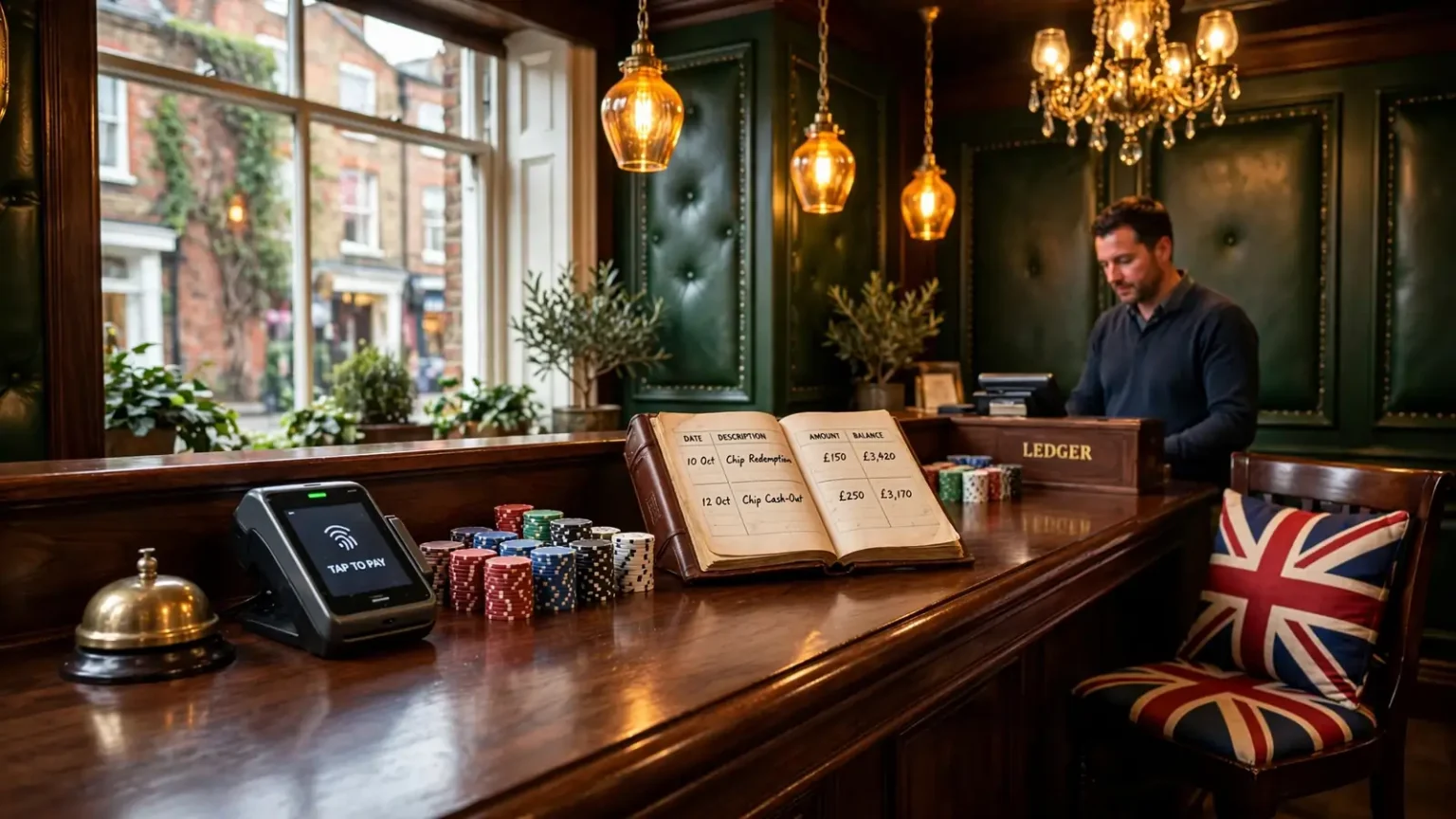
A payment method displayed beside the deposit button answers only one question: whether the casino can take money through that route. It does not, by itself, establish how winnings will be returned. That distinction matters for anyone checking whether a Klarna card or another Klarna-linked route can be used at a UK casino. A deposit option and a withdrawal option are not interchangeable promises.
The route shown at the point of payment may be deposit-only, or the casino may process a later payout through a different channel. The cashier’s deposit menu is therefore an incomplete map of the movement of funds. A method that accepts money at the start does not necessarily provide a matching way to receive it at the end.
Closed-Loop Approach
Payouts are generally expected to return to the original payment source to comply with anti-money laundering controls.
UK anti-money laundering controls help explain the usual pattern. Payouts are generally expected to go back to the original payment source, a safeguard against funds moving through unrelated accounts. This is often called a closed-loop approach: the transaction has a traceable path rather than an improvised exit. If a deposit was made through a particular account or instrument, the casino may first try to return funds there, subject to its procedures and the payment route’s capabilities.
That principle can complicate assumptions about Klarna. Even if a cashier were to display a Klarna-related option for deposits, that would not establish that Klarna can receive withdrawals, that every account is eligible, or that a payout would follow the same route. Nor does the presence of a card brand settle the question: the relevant details are the specific payment product, the casino’s current cashier and its withdrawal process. The label is not the whole journey.
Where the original source cannot receive a payout, the casino may require another route or further checks before releasing funds. A different destination is not simply a matter of convenience: the operator needs to establish that it belongs to the same customer and that the transaction remains consistent with its controls. Providing inconsistent ownership details can create avoidable friction. The money may be available in the casino account while the return route is still being resolved.
Verification has its own place in that process. A first withdrawal can involve checks of identity, payment ownership or other account details, and incomplete verification can delay approval. A specialist review of casino withdrawals describes internal processing and verification as factors that can extend the wait for an initial payout; that is a report about how the process may work, not a fixed timetable for every operator. No reliable timing can be inferred from the speed of a deposit.
The operator’s internal approval is also part of the withdrawal, before any payment provider or bank completes its side. A casino may have received a request without having authorised it yet. Once approved, the receiving route still matters. This is why a deposit that appears to clear promptly cannot be treated as evidence that the return journey will be equally prompt.
Casinos That Accept AstroPay in the UK
For a player investigating whether online casinos accept Klarna deposits, the useful check is not merely whether a payment logo appears. The deposit and withdrawal terms need to be read together: whether the option is available to that account, how the casino handles payouts from it, and what happens if the original source cannot accept returned funds. A search result or cashier label cannot resolve those account-specific details.
The practical distinction is plain. Funding establishes that money entered the casino; it does not establish how, or when, it can leave. The return path has rules of its own. A small but consequential difference.
Mobile Slots and Payment Compatibility
A casino can be designed for a phone without offering every payment brand on a phone-sized cashier. The mobile slot experience and the deposit menu are separate parts of the service: one concerns access to games on a smaller screen, the other concerns which payment routes the operator makes available to an account. A page describing “Klarna mobile slots” does not establish that Klarna appears at the cashier, or that it can be used for a deposit.
This distinction matters because payment-related searches can make a brand and a game experience sound like a single product. They are not. A slot may load on a mobile browser while the cashier offers a different set of methods from those a review or older page describes. The visible options can also depend on the casino and the payment product being used. The current cashier is the relevant place to confirm availability; the device itself proves nothing.
That is less glamorous than a neat label. It is also more useful.
Some UKGC-licensed casinos accept Apple Pay for deposits, but that does not make Apple Pay universal across mobile casinos, nor does it say anything about Klarna. Visa and Mastercard appear in a specialist review’s list of payment methods, but current UK availability and whether a particular card product is eligible still need to be checked in the cashier. A card brand on a general list is not a promise that every card bearing its name will work in every account.
Casinos That Accept Boku in the UK: Payment Guide
The same caution applies to pages presenting online slots alongside a payment logo. A logo can describe a brand, a past cashier configuration, or a route that is unavailable to a particular customer. It is not evidence that the payment method is accepted for gambling deposits by a UK-licensed casino. Nor does a mobile-friendly site change the rules or conditions attached to the cashier.
“Free” slots are a separate case in the wording, too. A free-play game does not demonstrate that any payment method is available, because no deposit route is being tested. Moving from free play to a real-money account brings the cashier into the picture; the game’s mobile presentation still says nothing about which methods that cashier supports.
The sensible distinction is plain: check the casino’s current payment menu on the account being used, rather than inferring compatibility from a mobile slot page, a brand name, or a general list. Mobile access is one feature. Payment acceptance is another.
Real-Money Slots: Funding Is Not the Same as Playing
A payment method and a slot game belong to different parts of the casino experience. A cashier records how funds enter an account; the games area determines which titles are available to play. Finding a reference to Klarna beside a slots app, site or machine therefore does not establish that Klarna can fund a real-money session, or that it unlocks any particular game. The two questions should not be made into one.
“Real money” describes what is at stake during play, not how the account was funded. A balance deposited through an available route may be used for eligible casino games, but the payment label does not turn a free-play title into a real-money game or make a particular slot available. Nor does a search for slots that accept Klarna establish that a casino offers that combination. Availability is a matter for the operator’s current account and game arrangements, not a feature inherent in the slot itself.
Do
- Use the casino’s current cashier to confirm payment options
- Set financial limits before making your first deposit
Don’t
- Assume a payment logo guarantees a method’s availability
- Treat a slot game title as evidence of payment compatibility
This distinction matters because the words surrounding a payment brand can make a product sound more settled than it is. “Klarna slots” may suggest a special category of games, when it is really a question about whether a cashier accepts a particular route and whether the account can then access real-money play. There is no separate Klarna version of a slot machine implied by that wording. Funding and playing remain separate steps.
The British framework also treats an account as more than a container for deposits. Remote gambling licensees must invite new customers to choose a financial limit before the first deposit, and keep controls available for managing limits at account level. That places a decision about spending alongside the decision to fund the account, rather than leaving it as an afterthought once play has begun. The distinction is deliberate: a payment transaction is not itself a measure of what someone intends to spend over time.
A slot session can involve repeated stakes from an account balance, so the initial deposit does not describe the whole pattern of play. Limits give the account a broader financial boundary; the cashier simply shows which funding routes are available at that moment. Neither tells the other what to do. A payment route cannot be treated as permission to play without limits, and a game title cannot establish that a certain funding method is accepted.
Casinos That Accept POLi in the UK: What to Check
The practical description is less mysterious than the phrasing of the searches suggests: a casino account may have funding options, real-money games and spending controls, each with its own rules. A reference to “free Klarna slots” does not merge those parts, while a “Klarna slots review” cannot settle current cashier availability for every account. Funding is an entry point. Play is another decision.
Deposits, Payout Speed and the Cost of Moving Money
A deposit and a withdrawal travel in opposite directions, but they do not necessarily move at the same pace. A card payment may reach a casino account instantly, while a payout to that card takes several business days. That contrast, noted in specialist casino reviews, is why “instant deposit” says little about how quickly winnings might return.
The word instant belongs to a particular stage of the transaction. It may describe the moment a deposit is authorised, not the later movement of money through the casino and payment networks. A withdrawal also has an internal casino approval stage, so a fast transfer service cannot by itself settle the whole journey. A quick entrance is not a quick exit.
Specialist payment reviews identify PayPal, open banking services and debit cards connected to fast payout systems among the methods that can return funds quickly. That is a comparison, not a promise for every casino account. The casino’s own processing and the particular route still matter. A label such as “Klarna instant banking” should not be read as evidence that a Klarna deposit can be withdrawn directly, or that a deposit route will be available for payouts. The cashier’s stated timings are more useful than the adjective attached to a payment option.
Attention A fast deposit does not guarantee a fast withdrawal, as payouts involve internal casino approval and different network timings.
Costs can be less visible than timing. Specialist payment guides describe possible charges at several points: a casino may charge a transaction fee; the payment provider, card issuer or bank may have its own fee; and a transfer involving another currency can carry an exchange-rate spread. A cryptocurrency transfer may also involve a network fee. Which costs apply depends on the route and transaction, so a method with no obvious casino charge is not necessarily cost-free.
The exchange rate deserves particular attention where the account and payment are not in the same currency. A conversion spread is built into the rate rather than shown as a separate flat charge, and can therefore be harder to notice. The final amount received may differ from the figure first displayed, even when no separate fee appears.
For a meaningful comparison, the deposit and payout timing should be read separately, and the cost should be considered across the whole journey rather than at the cashier alone. A method can be quick at one end and slow at the other; a visible fee can be only one part of its price. Payment brands are not clocks, and a familiar logo does not reveal every charge.
Bonuses Depend on the Payment Method
A welcome bonus is attached to the casino’s terms, not simply to the fact that a deposit has reached the account. The payment route can determine whether a promotion applies. That distinction matters when comparing a Klarna casino welcome bonus with a cashier’s available deposit methods: a payment option and a bonus-eligible option are not necessarily the same thing.
Casinos That Accept Maestro in the UK
The offer’s terms should identify which deposits qualify and whether a particular method is excluded. The same check applies to a slots promotion, a bonus code or an offer advertised as having no deposit requirement. Their labels describe the promotion, not a promise that every payment route will qualify. If the cashier and the bonus terms do not clearly agree, the promotion should not be treated as available for that transaction.
Payment brands acquire reputations for convenience, but a reputation is not a bonus rule. A specialist review describes PayPal as popular for speed and convenience while noting that it may be excluded from bonus eligibility. The qualification is important: it does not establish a universal policy across UK casinos, and current terms can differ between operators. Convenience at the cashier does not settle the question.
The same specialist-review material reports that Skrill and Neteller are offered at some sites and are often excluded from promotions. “Often” is a description of that source’s findings, not a guarantee about every casino or every offer. The casino’s own promotion terms remain decisive. An e-wallet appearing among payment choices does not, by itself, establish that a deposit made through it will count towards a bonus.
Bonus Eligibility Caveats
Payment methods like PayPal, Skrill, and Neteller are often excluded from promotional offers. Always check the specific terms of a welcome bonus or code to see which deposit routes qualify.
This is where apparently simple comparisons become less simple. A site may list a payment method, advertise a bonus, and still attach separate conditions to each. A code may also have its own eligibility terms, so entering it does not erase a payment-method exclusion. The relevant details are the accepted deposit routes for that specific promotion, any stated exclusions, and what the account shows when the offer is activated.
For searches combining Klarna, real-money casino play and a slots bonus, the practical issue is not whether those phrases sit together in an advert. It is whether the operator’s current terms explicitly include the selected route. Read the conditions before depositing; if the method is excluded, the headline offer is beside the point.
Small print, doing large work.
Minimum Deposits, Limits and Account Currency
A low minimum can make a payment route look suitable, but it says little about the amount an account can comfortably sustain. A specialist casino review gives a broad indication that entry deposits may begin within the £10–£20 range, with the threshold changing according to the method selected. That is a guide, not a cashier setting: the amount shown for a particular account is the one that matters.
This is why a search for a £5 Klarna deposit does not establish that such a deposit is available. Nor does a payment brand appearing in a casino’s general information confirm that it can be selected in the cashier, or that a particular minimum applies to it. Deposit menus and thresholds can differ between operators and methods. The practical details are attached to the account, not to the phrase used to describe a payment.
Casinos That Accept Zimpler in the UK
The minimum is only one boundary. Casinos may also set maximum deposits for an individual transaction or across a period, and those ceilings can depend on the payment method and account status. A failed transaction may therefore reflect a limit rather than a problem with the payment service itself. The displayed terms and account controls are more useful than assumptions based on a method’s name.
There is also a less visible choice: the account’s currency. A specialist review reports GBP support, but that should not be treated as confirmation for every casino or account. Currency is worth checking before the first transaction. If the casino account and payment account use different currencies, conversion may enter the process and alter the amount received or charged.
Financial limits have a separate purpose from deposit minimums and maximums. UK rules require remote gambling licensees to bring up a financial limit before a new customer makes a first deposit, while also making account-level limit controls accessible. The initial prompt and the continuing controls are parts of the same system: one introduces the decision, the other allows it to be revisited. They do not turn a payment method into an exception to the account’s limits.
A small minimum is not a spending plan. Nor is an available payment button permission to ignore the controls attached to the account.
Choosing a Payment Route Without Assuming Klarna Is the Answer
A payment route is not useful merely because its name appears on a casino page. The practical test is whether it is available in that casino’s cashier, can be used for the intended transaction and fits the route by which funds may later be returned. A brand mentioned in a search or promotional description is not the same as a working option on an individual account.
Verify Payment Route
- Check if the method is available in the current cashier
- Confirm the payment account is in the same name as the casino account
- Verify if the method supports both deposits and withdrawals
- Check the cashier for applicable transaction fees or currency conversion
Ownership is the quiet hinge. When the casino account and payment account belong to the same customer, basic identity details are less likely to cause avoidable friction. The cleanest arrangement is often one named account used consistently for both deposit and withdrawal. Differences in names or account details can prompt questions at the moment when a transaction is being checked; the payment method’s label cannot resolve them.
Before depositing, the cashier’s withdrawal information matters as much as its deposit buttons. A method can be presented for funding without being suitable for receiving a payout. The casino’s terms should explain whether the same route is supported in both directions and whether another method may be needed. That is a more useful comparison than asking which Klarna alternative is “best” in the abstract: the answer depends on the account, the operator and the return route.
Bank transfers deserve attention to timing as well as ownership. A specialist payment review notes that delivery can be affected by the bank’s cut-off times, weekends and currency conversion. Those factors make a transfer less predictable than its simple appearance in a cashier might suggest. Account currency should also be clear before funds move, since conversion can complicate an otherwise direct route.
The sensible choice, then, is not a universal winner or a supposed Klarna-enabled slot site. It is a payment account in the same customer’s name, shown by the casino as compatible with both directions, with its terms understood before the first transaction. A familiar payment logo is a small clue. The cashier and the account conditions are the evidence.
GamStop Status Does Not Change the Payment Rules
A casino’s relationship with GamStop and its cashier are separate matters. A site being outside the self-exclusion scheme does not establish that Klarna can be used there, or that a payment route is suitable for gambling. The cashier’s available methods do not alter the protections attached to self-exclusion.
Casinos That Accept iDEAL in the UK: How to Check
Nor does the phrase “not on GamStop” describe a separate legal category of casino. Remote gambling licensees serving customers in Great Britain must hold the relevant UK Gambling Commission licence, regardless of where they are based. A site outside the UKGC system is not made part of it by accepting a familiar payment brand. Payment logos are not regulatory credentials.
GamStop is a self-exclusion measure, not a filter for payment options. Looking for Klarna slots at casinos outside the scheme cannot turn a blocked or unsuitable payment route into an authorised one, and it is not a way to reverse or bypass a decision to exclude gambling. A payment search cannot substitute for a protection.
The same boundary applies to credit cards. The regulator prohibited credit-card payments for gambling on 14 April 2020, and the restriction remains in force. A casino’s status in relation to GamStop does not create an exception. A payment arrangement that routes credit-card funds through an intermediary is not a loophole either.
There is a social point in this distinction. Payment brands are designed to make spending feel familiar; self-exclusion exists to place a boundary around gambling itself. Treating the first as a route around the second confuses convenience with permission. Dry distinction.
For UK customers, a claim about a casino being “not on GamStop” says nothing by itself about its UKGC status or its cashier. UK-licensed casinos must provide responsible-gambling tools, including self-exclusion. Where self-exclusion is in force, changing payment method or looking for another cashier does not change the underlying protection. A payment option is a means of moving money, not a verdict on whether gambling is appropriate or permitted.
What is the fastest withdrawal method for UK casinos?
PayPal, open banking and debit cards linked to fast payout systems are generally among the quickest options. The casino’s approval process and whether your account is fully verified also affect the time.
Why must withdrawals return to the deposit method?
Returning funds to the original payment source is a common anti-fraud and anti-money-laundering control. Using a different route may mean additional verification.
Do UK casino withdrawals require verification?
Verification can be part of the withdrawal process, particularly for a first withdrawal. Delays may occur while checks are completed, and a fully verified account can help avoid extra processing time.
Why can a fast payout casino still delay my withdrawal?
A casino’s internal approval process can add time before a payout is sent, and first withdrawals may take longer while verification is completed. The payment method can also affect delivery time.
What is the current minimum deposit?
Minimum deposits usually start at £10–£20, depending on the payment method.
Material created by the team Pure Casino UK Guide


